
What Motivates You to Find Motivation & Stay Driven
Motivation is one of the most powerful forces behind success. Whether you’re pursuing a career goal, improving your health, or building a business, knowing what drives you helps you move forward.
Many people believe motivation comes from sudden bursts of inspiration. In reality, motivation is something that can be developed through mindset, habits, and clear purpose. When you understand what drives you, it is easier to stay focused. You can overcome challenges and keep moving toward your goals.
In this guide, you’ll learn what drives people. You’ll explore the psychology of motivation. You’ll also learn practical strategies to get motivated and stay motivated long term.
What Motivates You? Interview Answers, Work & Life Tips by a Motivational Coach
About the author: Hi, I’m Ryan Zofay, a motivational coach. I’ll be honest with you—there was a time in my life when nothing motivated me. Not a job, not a goal, not even the people around me. I was lost in addiction and running from a childhood marked by loss and pain.
On October 6th, 2001, I was pronounced dead at the scene of a car accident and woke up from a coma three days later. That moment changed everything. It forced me to take a hard look at my life and ultimately set me on a path of transformation.
Rebuilding my life after addiction and adversity shaped the way I understand motivation today. I committed to becoming the best version of myself, and I spent thousands of hours on personal growth. I’ve spent over 1,500 hours in personal development training. I helped found and build the 9-figure We Level Up organization from nothing. I’ve coached thousands of people through similar questions. I’ve coached thousands of people seeking direction, clarity, and purpose in their lives.
When someone asks me, “Ryan, what motivates you?” I don’t give a rehearsed answer—I give them the truth. Purpose is the only sustainable source of motivation that exists. Everything else—money, recognition, fear—burns out eventually. Purpose doesn’t.
That belief shapes my work today through coaching programs, seminars, and personal development training. I teach practical strategies that help people break limiting beliefs. I also help them build discipline and pursue goals that truly matter.
Motivation isn’t just a feeling that shows up when life is easy. It’s a skill—one you strengthen through mindset, daily habits, and purposeful action.
Whether you’re preparing for the “what motivates you” interview question, feeling stuck at work, or seeking more in life, this guide can help. It helps you reconnect with the one thing that fuels lasting motivation: purpose.
Jump To
Table of Contents
What Motivates You? The Simple Definition
Motivation refers to the internal and external forces that drive people to take action toward a goal. These forces can include personal purpose, rewards, progress, recognition, or the desire to improve one’s life. But it’s more layered than that.
Psychologists often divide motivation into two categories:
| Type | Description | Lasts? |
|---|---|---|
| Intrinsic Motivation | Driven by internal rewards and satisfaction — purpose, growth, fulfillment | Long-term |
| Extrinsic Motivation | Driven by external rewards — salary, status, praise or success | Short-term |
Most people rely on extrinsic motivation. Like a raise, a promotion, a pat on the back. And while those things matter, they don’t last. Research backs this up. Studies in positive psychology consistently show that people who connect their work to intrinsic values report significantly higher satisfaction, engagement, and resilience.
As I’ve shared in my career coaching resources, lasting change in your career or your life starts with understanding the why behind what you do. That’s the foundation of real motivation.
Common Questions About What Motivates You
People often look for practical answers about motivation. They ask why it fades, how to bring it back, and what drives action. The following questions address some of the most common motivation challenges.
What Motivates People?
What Motivates People?
Motivation typically comes from a combination of internal purpose and external rewards. Internal motivators include personal growth, values, and a sense of accomplishment, while external motivators can include recognition, financial success, or career progress. Most people are driven by a mixture of both.
When goals align with personal values and progress becomes visible, motivation tends to increase naturally.
Exercise:
Write down three things that motivate you most in life. These might include personal growth, financial independence, helping others, or achieving meaningful goals.
How Do I Motivate Myself When I Feel Stuck?
How Do I Motivate Myself When I Feel Stuck?
One of the most effective ways to rebuild motivation is to start with small, achievable actions. Taking even a small step creates momentum and helps break the feeling of being stuck.
Instead of focusing on the entire goal, identify the next simple action you can take today.
Exercise:
Choose one task that takes less than 10 minutes and complete it immediately. This helps reset momentum and restore motivation.
Why Do People Lose Motivation?
Why Do People Lose Motivation?
Motivation often declines when goals feel unclear, progress seems slow, or individuals experience burnout or overwhelm. Without visible progress or a strong sense of purpose, it becomes difficult to maintain energy toward a goal.
Reconnecting with the original purpose behind a goal can help restore motivation.
Exercise:
Write down why your goal matters and what positive outcomes it will create in your life.
Is Motivation More Important Than Discipline?
Is Motivation More Important Than Discipline?
Motivation helps people start pursuing goals, but discipline helps them continue when motivation fluctuates. Successful people often use clear routines and habits to keep making progress, even when motivation is low.
When habits support goals, motivation becomes easier to maintain.
Exercise:
Choose one daily habit that supports your biggest goal and commit to repeating it for the next 30 days.
What Are the Most Powerful Sources of Motivation?
What Are the Most Powerful Sources of Motivation?
Several common motivators influence human behavior across cultures and professions. These include personal growth, meaningful goals, progress, recognition, and the desire to improve one’s life or help others.
Understanding which of these motivates you most can help you design goals that naturally sustain motivation.
Exercise:
Rank the following from most motivating to least motivating for you: purpose, achievement, financial success, recognition, and personal growth.
Motivation is influenced by many factors including purpose, progress, confidence, and structured habits. Research in psychology and neuroscience shows that motivation rises when people have clear goals. It also rises when they see progress. Motivation grows when they believe their actions will lead to meaningful results.
Instead of relying on short bursts of inspiration, motivation lasts longer. It works best when you build routines. It also helps to follow your personal values. Set clear goals you can measure. By applying these strategies consistently, individuals can create an environment where motivation becomes easier to maintain and long-term success becomes more achievable.
The Psychology of Motivation
Researchers have studied motivation for decades to understand why people pursue goals and what drives human behavior.
One of the best-known frameworks is Self-Determination Theory. It suggests that motivation depends on three psychological needs:
- Autonomy – the ability to make choices and control your direction
- Competence – feeling capable and improving skills
- Connection – meaningful relationships and belonging
When these needs are met, motivation naturally increases. People feel more energized, focused, and committed to achieving meaningful goals.
Understanding this psychology helps explain why some people maintain motivation while others struggle to stay consistent.
Why Motivation Matters for Success
Motivation is not just about feeling inspired—it directly affects productivity, persistence, and long-term achievement.
When someone is motivated, they are more likely to:
- take consistent action toward goals
- overcome obstacles and setbacks
- maintain focus during difficult periods
- build habits that support personal growth
Without motivation, even the best plans often fail. Developing the ability to generate motivation internally is one of the most valuable skills for success.
How to Answer “What Motivates You?” in an Interview
This is one of the most common interview questions out there, and one of the most mishandled. Hiring managers aren’t looking for a perfect script. They’re looking for self-awareness, authenticity, and alignment with the role.
Here’s the framework I teach my coaching clients:
The 3-Part Answer Formula
1. Identify your genuine motivator
Be specific. “I’m motivated by helping others” is too vague. “I’m motivated by solving complex problems that directly improve the customer experience” is compelling and credible.
2. Connect it to a real example
Give a story. Briefly share a situation where that motivator drove you to produce exceptional work.
3. Link it to the role
Show the interviewer why your motivation makes you the right person for this position.
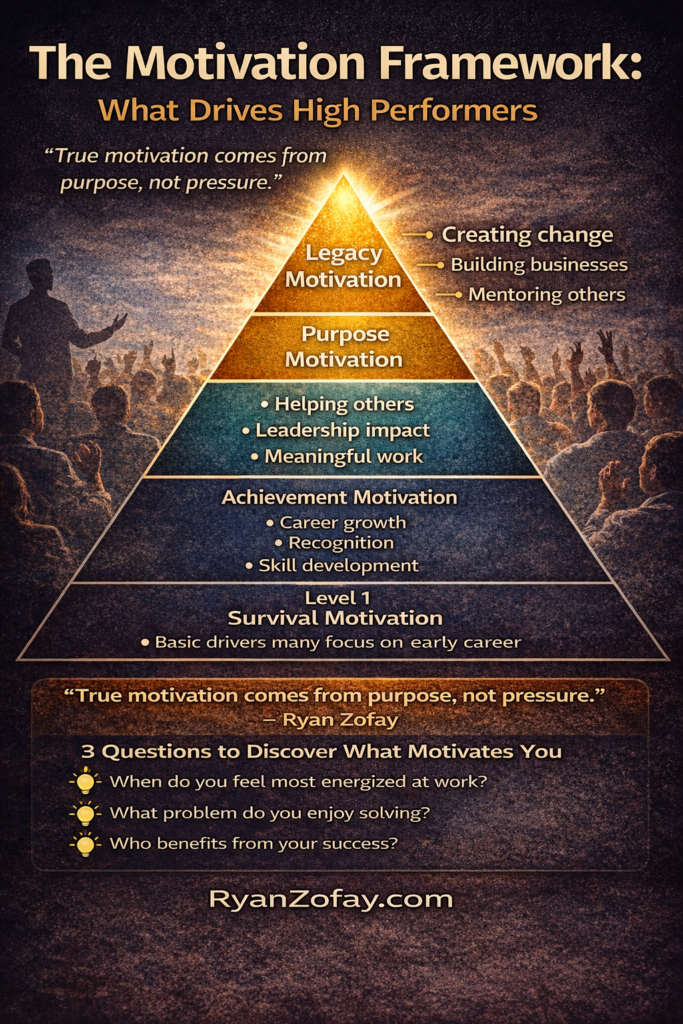
Infographic: The Motivation Framework explaining what motivates you to work hard and succeed. Created by Ryan Zofay.
What Motivates You Interview Question — Sample Answers
Here are several strong what motivates you interview answers you can adapt based on your field and personality:
Sample Answer #1 — Growth-Oriented
“What motivates me most is continuous learning. I thrive in environments where I’m being challenged to think differently and develop new skills. In my last role, that drive led me to speak on some of the biggest stages. They were outside my core and typical persuasive talks. But they were some of my best-performing deliveries of the year.
Sample Answer #2 — Impact-Driven
“I’m motivated by seeing the direct impact of my work on real people. Knowing my work improves someone’s experience or solves a real problem keeps me energized, even on tough days
Sample Answer #3 — Results-Focused
“Hitting and exceeding targets genuinely excites me. I set personal benchmarks that go beyond what is required. I believe standards separate good performance from great performance
Sample Answer #4 — Team-Oriented
“Being part of a high-performing team motivates me more than anything. When everyone is pulling in the same direction, I do my best work — and I love contributing to an environment where others do too.”
How to Tailor Your Answer to the Position
The best answers to “what motivated you to apply for this position” directly mirror the job description.
Before your interview, identify what motivates you the most. Start by asking:
- What the role requires (skills, outcomes, environment)
- What values the company promotes
- How your personal motivators overlap with both
This isn’t manipulation — it’s self-awareness applied strategically. If your values genuinely don’t align with the role, that’s information worth having too.
What NOT to Say
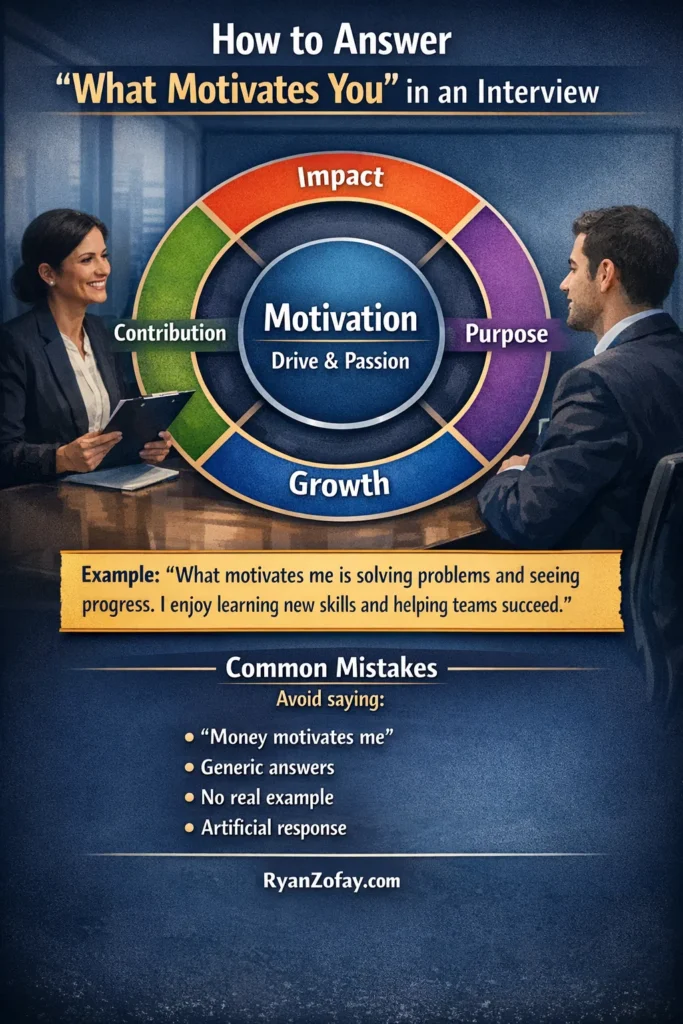
Avoid these common mistakes:
- ❌ “Money” — Even if it’s partly true, it signals short-term thinking
- ❌ “I just want to do a good job” — Too passive, no substance
- ❌ “I’m motivated by job security” — Red flag for most employers
- ❌ Anything rehearsed-sounding — Interviewers can tell
How to Answer What Motivates You in an Interview Infographic
What Motivates You at Work? The Deeper Drivers
Beyond interview prep, understanding what motivates you at work is critical for long-term performance and satisfaction. After coaching thousands of executives and professionals, I’ve identified several core workplace motivators:
The Top Workplace Motivators
1. Autonomy
People perform better when they have ownership over their work. Micromanagement kills motivation. If you’re a leader, give your team room to lead themselves.
2. Mastery
The desire to get better at something meaningful is one of the most powerful internal drives. Build skill, track progress, and celebrate growth.
3. Purpose
This is the big one. When your work connects to something larger — a mission, a community, a cause — it stops feeling like a job. As I write in my personal development resources, purpose is the engine underneath everything else.
4. Recognition
This doesn’t mean constant praise. It means knowing your contributions matter. Simple, specific acknowledgment goes a long way.
5. Growth Opportunities
If you’re not learning, you’re stagnating. High performers need challenges. Routine without progression breeds disengagement.
Activity: Map Your Motivational Profile
Try this exercise I use with coaching clients:
- List the three moments at work when you felt most energized and engaged
- Identify what those moments had in common
- Note whether those elements are present in your current role
- If they’re missing — that’s your roadmap for change
This small activity creates enormous clarity. Motivation isn’t a my


What Motivates You in Life? Moving Beyond the Job
The question “what motivates you in life?” is one I have asked myself many times. Sometimes I asked it at my lowest points.
I’ve shared this story before: I lost my sister to Alexander’s Disease when I was 5 years old. My parents divorced. My mother fell into addiction. I followed. By my teens, I’d dropped out of school, been homeless, and was on a path that statistically ends one way. Then it almost did end — a car accident, a coma, a second chance I didn’t deserve but got anyway.
What motivated me to rebuild my life wasn’t a salary. It wasn’t a title. It was realizing — after years of chasing external validation — that happiness is an inside job.
As I often tell the audiences at my life and business coaching events:
“If you’re not living every day with a sense of purpose, then you’re not living.”
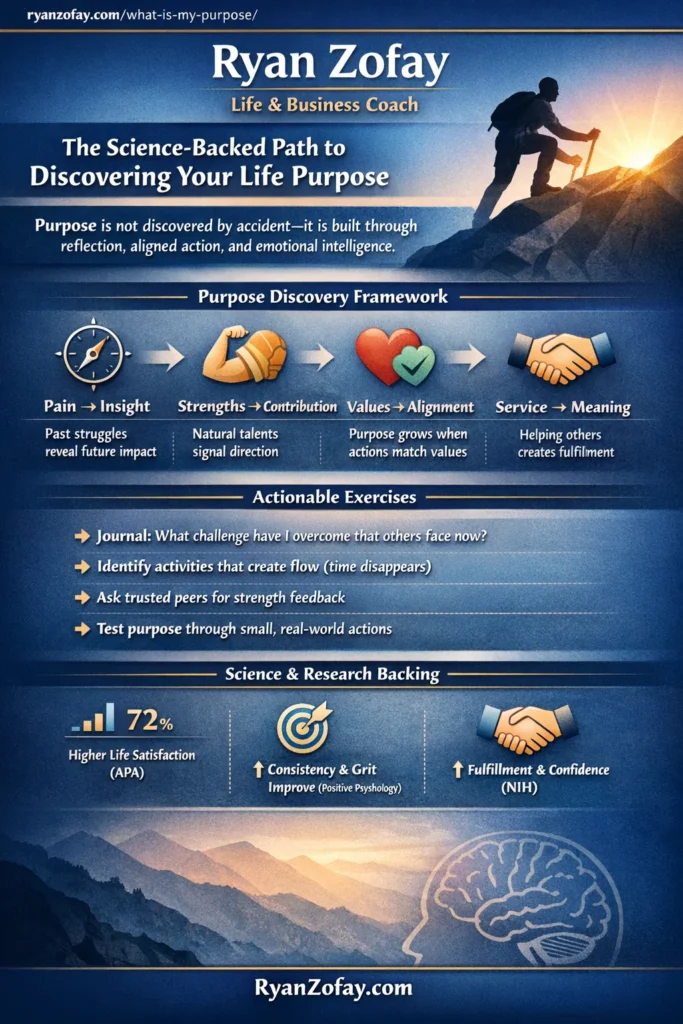
Here are the life motivators I’ve come to trust:
- Values alignment — Know what you stand for, and let that guide your decisions. Explore how to identify your core values
- Personal growth — Not comfort, not security — growth. Discomfort is where change lives
- Connection — Real relationships with people who hold you accountable and love you through your failures
- Contribution — Giving back creates meaning that ambition alone cannot provide
- Gratitude — When I started being grateful for what I had instead of resentful about what I lacked, everything shifted
What to Do When You Have No Motivation
Let me be direct about this: there are seasons when motivation disappears entirely. You’re not broken. You’re human.
After building We Level Up — a 9-figure behavioral health organization — I’ve worked alongside people who felt completely empty. Clinically, persistent loss of motivation can be a symptom of depression, burnout, or other conditions that deserve professional attention. Please speak to a qualified healthcare provider if you’ve been struggling for an extended period.
That said, here are the behavioral strategies that have consistently worked for me and my clients:
Top 10 Steps to Reignite Your Motivation
(Insights, mindset shifts, and practical exercises I apply with my coaching clients)
Motivation is something everyone struggles with at different stages of life. Even the most successful entrepreneurs, athletes, and leaders experience moments where progress feels stalled.
The truth most people miss is this: motivation doesn’t come before action — it grows because of action.
As a neuro-linguistic specialist and performance coach, I often teach that motivation is a system you build. It is not a feeling you wait for. When you shift your mindset and create intentional habits, motivation naturally returns.
Here are 10 powerful steps to reignite your motivation, with practical tips and activities you can start today.
1. Start Smaller Than You Think You Should
One of the biggest mistakes people make is believing they need massive motivation before taking action.
In reality, action creates motivation. If a goal feels overwhelming, shrink it until it feels almost too easy to fail.
Instead of:
- Writing an entire plan
- Finishing a full workout
- Completing a big project
Start with something simple:
- Write one paragraph
- Walk for five minutes
- Complete one task
Small actions activate momentum. Once you begin moving, your brain naturally wants to keep going.
Activity: Choose one task you’ve been avoiding and commit to working on it for just five minutes today.
2. Reconnect With Your “Why”
When motivation fades, it’s often because people lose connection with their deeper purpose.
Ryan Zofay often reminds clients that clarity fuels energy.
Ask yourself:
- Why did I start this goal in the first place?
- What will my life look like when I achieve it?
- Who benefits from my success?
Revisiting your purpose can reignite the emotional drive behind your goals.
Activity: Write down three reasons why your goal matters to your life, your future, and the people around you.
3. Set Clear and Meaningful Goals
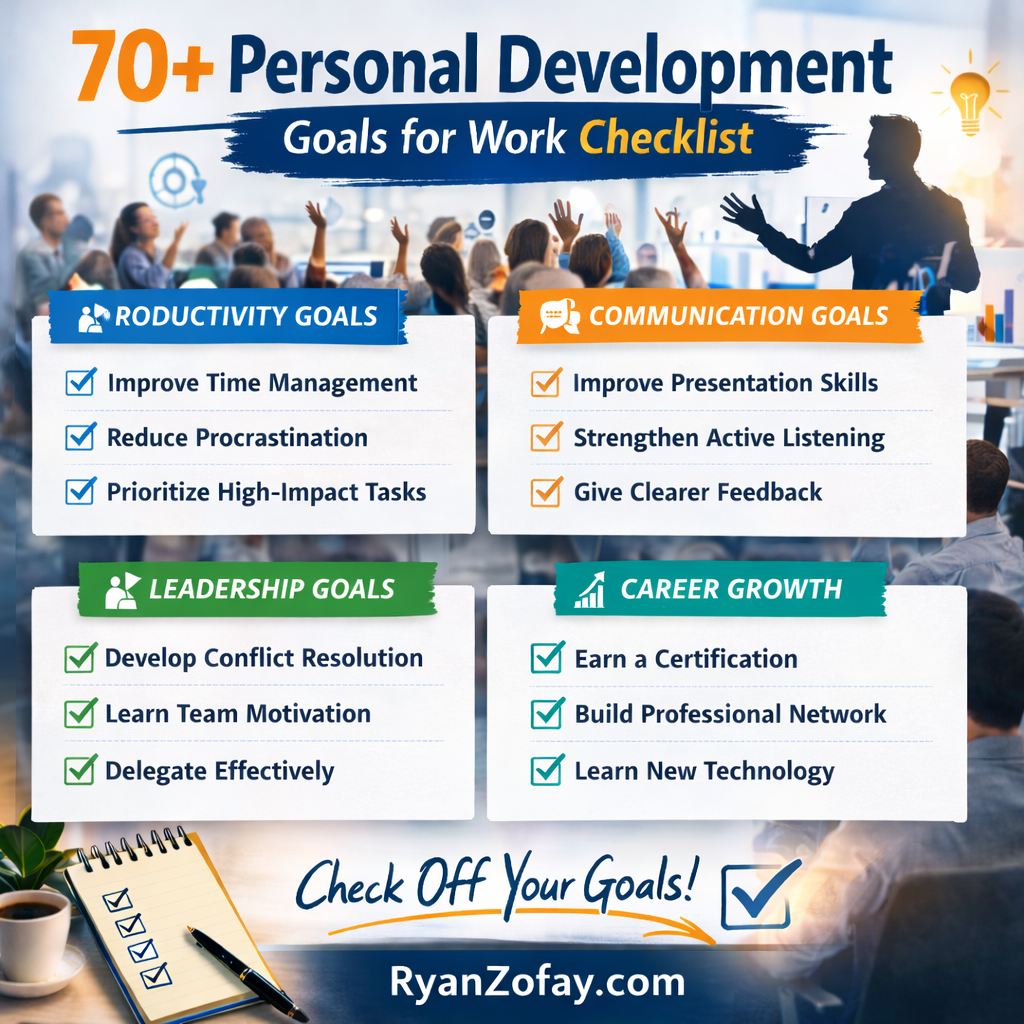
Motivation thrives when goals are specific. Vague goals like “be successful” or “do better” don’t give your brain something to aim for. Clear goals, on the other hand, create direction.
Instead of broad intentions, define measurable outcomes such as:
- Improving your health with a consistent routine
- Launching a business idea
- Learning a new professional skill
- Building stronger relationships
When goals are meaningful and well defined, your mind begins to organize actions around achieving them.
Tip: Use the formula: “I will achieve X by doing Y within Z timeframe.”
4. Break Big Goals Into Smaller Wins
Large goals can feel intimidating, which often leads to procrastination.
The solution is to break them into smaller milestones.
Every milestone you complete builds confidence and reinforces progress. These small wins gradually build the motivation needed to tackle larger challenges.
High performers understand that success is rarely one big leap — it’s a series of small steps done consistently.
Activity: Take one major goal and break it into five smaller actions you can begin this week.

5. Move Your Body
Physical movement is one of the most powerful and scientifically supported ways to improve motivation.
Exercise increases dopamine, serotonin, and endorphins — the brain chemicals associated with energy, focus, and motivation.
You don’t need an intense workout. Even small movement can reset your mental state.
Examples include:
- A short walk outside
- Stretching or yoga
- A quick strength workout
- Deep breathing exercises
I frequently emphasize that your physical state directly influences your mental state.
Activity: Move your body for 10 minutes when motivation feels low.

6. Visualize the Outcome You Want
Visualization helps elite athletes, entrepreneurs, and high performers.It trains the brain to believe success is possible.
When you imagine achieving your goal, you create a mental blueprint for action.
Visualization helps:
- Strengthen belief
- Increase focus
- Improve persistence
The brain begins to align behaviors with the future you see clearly.
Activity: Spend two minutes each morning visualizing the version of yourself who has already achieved your goal.

7. Audit Your Environment
Your environment can either fuel your motivation or quietly drain it.
Look closely at:
- The people you spend time with
- The content you consume
- The spaces where you work and live
Supportive environments create momentum. Negative environments create resistance.
I often teach that success leaves clues — and so does failure.
If your surroundings don’t support your goals, it may be time to make intentional changes.
Reflection Questions:
- Do the people around me support my growth?
- Does my environment help or distract me?
- What small change could improve my focus?
By finding what drives you and using practical ways to stay focused, you can build momentum to reach your goals. You can also create lasting success.
The key is not to wait for motivation. Learn to create it with clarity, discipline, and purpose.
8. Eliminate Distractions
Motivation disappears quickly when your attention is constantly interrupted.
Modern distractions—social media, notifications, clutter, and multitasking—can significantly reduce productivity.
Creating a focused environment helps preserve mental energy.
Consider strategies like:
- Turning off notifications during work sessions
- Organizing your workspace
- Scheduling uninterrupted focus blocks
- Limiting unnecessary digital distractions
Activity: Set a 30-minute distraction-free work block today.

9. Celebrate Small Wins
Many people wait until the finish line to feel proud of their progress.
But motivation grows when you recognize progress along the way.
Celebrating small wins activates the brain’s reward system and reinforces productive behaviors.
Even simple recognition can strengthen motivation.
Examples include:
- Tracking daily progress
- Writing down completed tasks
- Acknowledging personal growth
- Sharing milestones with a mentor or coach
Progress builds confidence, and confidence builds momentum.

10. Get Accountability and Support
No one achieves meaningful success alone.
Accountability provides structure, encouragement, and honest feedback when motivation dips.
A mentor, coach, or trusted peer can help you:
- Stay committed to your goals
- Challenge limiting beliefs
- Maintain consistency during difficult moments
Ryan Zofay often reminds clients that accountability turns intention into action.
If you feel stuck, reaching out for guidance can be the catalyst that moves you forward.

Final Insight: Motivation Is Built Through Action
Motivation is not something you wait for.
It’s something you create through consistent action, clear purpose, and supportive habits.
When you use these strategies, you shift from short bursts of inspiration to a system that keeps you motivated long-term.
If you’re looking for new inspiration, find something meaningful to care about. You can also explore tools that help you understand what drives your success.
Small actions today can lead to massive transformations over time.
And sometimes, the only step required to reignite motivation is simply deciding to start.

What Motivates You to Perform Your Job Well? A Leader’s Perspective
For those in leadership — whether you’re managing a team of five or five hundred — this question takes on a new dimension. Your motivation doesn’t just affect you. It affects everyone around you.
Research from the ICF Global Coaching Study shows that 70% of individuals who receive coaching report improved work performance. Coaching paired with accountability boosts goal attainment by up to 95%. These aren’t abstract numbers — they reflect what happens when people get clear on what drives them and receive structured support to act on it.
The best leaders I’ve coached know their role is to create conditions that motivate others. They do not just stay motivated themselves. That means:
- Being transparent about organizational purpose
- Connecting individual contributions to larger outcomes
- Removing unnecessary friction and bureaucracy
- Investing in people’s growth, not just their output
- Modeling the mindset you want to see.
Explore my mindset coaching resources if you want to go deeper on building motivation as a leadership skill.
What Motivates People the Most?
Different people are motivated by different factors, but several common drivers appear across many successful individuals.
The most powerful motivators include:
- Personal purpose and meaning: Purpose-driven motivation or helping others or contributing to a meaningful mission.
- Progress toward meaningful goals: Achievement motivation or pursuing goals, accomplishments, or mastery of a skill.
- Recognition and achievement: Recognition motivation – gaining respect, praise, or acknowledgment from others.
- Financial or career growth: Financial motivation – working toward financial security or independence.
- Personal improvement and mastery: Personal growth motivation – improving knowledge, confidence, or health.
Understanding which of these motivates you most can help you create goals and environments that naturally support motivation.
Why People Lose Motivation
Motivation often fades when goals lose clarity or when progress feels slow. Several factors commonly reduce motivation:
- unclear goals or direction
- burnout or exhaustion
- fear of failure
- unrealistic expectations
- lack of visible progress
When these challenges appear, motivation may decline temporarily. The key is to adjust strategies rather than abandon goals. Reconnecting with your purpose, breaking goals into smaller steps, and focusing on consistent habits can help restore momentum.
The Science Behind What Motivates You
Motivation has been studied extensively in psychology, neuroscience, and behavioral science. Researchers have found several factors that affect why people set goals, how they keep trying, and what keeps them motivated over time.
Scientific studies show that motivation is strongly connected to clear goals, meaningful progress, personal autonomy, and consistent habits. These findings align with many personal development frameworks that emphasize purpose, discipline, and structured routines.
The research below shares key scientific insights on motivation and practical ways to use them in daily life.
Motivation Psychology: Research and Practical Strategies
Motivation is influenced by psychological, neurological, and behavioral mechanisms. Researchers who study motivation have found that dopamine signals, clear goals, confidence, and accountability systems strongly affect action. They affect whether people start and keep working toward their goals.
The following research highlights key scientific discoveries about motivation. It also shares practical strategies to use these findings in everyday life.
Motivation Research vs Practical Application
| Motivation Research | Insight, Exercises & Practical Guides |
|---|---|
| Dopamine and Motivation (Neuroscience Research). Key Statistics: Studies show dopamine activity increases significantly during reward anticipation, reinforcing goal-directed behavior. Neuroimaging research demonstrates dopamine responses can increase up to 50–100% when individuals anticipate meaningful rewards or progress. Dopamine helps reinforce behaviors that lead to rewards and motivates individuals to continue pursuing goals. Research overview: Dopamine and Motivation Research | Insight: Motivation increases when goals include clear milestones and visible progress markers. DIY exercise: Break one major goal into five measurable milestones and track weekly progress. Each milestone activates the brain’s reward system and reinforces motivation. Guide: How to Get Motivated |
| Goal-Setting Theory (Locke & Latham). Key Statistics: Research reviewing more than 1,000 studies found that individuals with specific and challenging goals perform 80–90% better vs. those with vague or easy goals. Clear goals consistently improve productivity and motivation. Research overview: Goal Setting Research Overview | Insight: Motivation improves when goals are specific, measurable, and tied to meaningful outcomes. DIY activity: Convert one broad goal into a measurable objective. Example: “Improve productivity” → “Complete three focused work sessions each day.” Guide: Goal Setting Examples for Success |
| The Progress Principle (Harvard Business School). Key Statistics: A study analyzing 12,000+ daily diary entries from employees found that making progress in meaningful work was the single most powerful motivator. Improving engagement and productivity significantly. Study summary: The Power of Small Wins | Insight: Small daily accomplishments strengthen motivation by reinforcing momentum and progress. DIY exercise: Create a “daily wins” list and record three accomplishments each day, no matter how small. This reinforces progress and increases motivation. Guide: Printable daily journaling templates |
| Habit Formation Study (University College London). Key Statistics: A long-term behavioral study tracking participants for 84 days found it takes an average of 66 days for behaviors to become automatic habits. With some habits forming as quickly as 18 days and others taking up to 254 days. Study summary: Habit Formation Research | Insight: Motivation becomes more reliable when supported by consistent habits and routines. DIY activity: Choose one daily habit that supports your biggest goal and perform it at the same time each day for 30 days. Consistency gradually transforms effort into automatic behavior. Guide: Morning Routine for Success |
| Self-Efficacy Theory (Albert Bandura). Key Statistics: Research involving thousands of participants shows individuals with high self-efficacy demonstrate significantly higher persistence and performance. Studies found students with higher self-efficacy achieved higher academic performance and goal completion rates. In comparison with peers who doubted their abilities. Research overview: Self-Efficacy Research | Insight: Confidence in your ability to succeed increases motivation and resilience during challenges. DIY exercise: Write down three challenges you successfully overcame in the past. Reflect on the skills and mindset that helped you succeed. Review this list whenever motivation declines. Guide: How to Believe in Yourself |
| Expectancy Theory (Victor Vroom). Key Statistics: Research in organizational psychology shows that motivation increases significantly when individuals believe their effort will lead to performance and meaningful rewards. Studies across workplace environments show higher engagement and productivity when expectations and rewards are clearly aligned. Theory explanation: Expectancy Theory Overview | Insight: Motivation increases when people clearly see how their actions produce meaningful results. DIY activity: Write down your goal and identify three actions that will directly move you closer to achieving it. Clarity reduces uncertainty and strengthens motivation. Guide: Personal Development Strategies |
Motivation Research Takeaways
Scientific studies consistently show that motivation is not simply an emotional state but a system influenced by psychology, neuroscience, and behavior patterns.
Across multiple research fields, several consistent findings appear:
- clear and challenging goals significantly improve motivation
- visible progress reinforces engagement and persistence
- consistent habits reduce reliance on temporary inspiration
- belief in one’s ability to succeed strengthens resilience
- accountability and meaningful rewards sustain long-term motivation
By using these research-backed insights with practical exercises and structured habits, people can build motivation. It can stay steady even during hard or demanding times.
How to Stay Motivated Long Term
Maintaining motivation over time requires more than temporary excitement. Long-term motivation is built through consistency and mindset.
Strategies for staying motivated include:
- reviewing your goals regularly
- tracking progress
- surrounding yourself with supportive influences
- maintaining healthy routines
- focusing on long-term purpose instead of short-term emotions
Motivation may fluctuate, but strong habits and clarity of purpose help sustain progress even during challenging periods.
Long Term Key Takeaways
- Motivation is driven by both internal purpose and external rewards.
- Understanding what motivates you helps create clearer goals.
- Discipline and daily habits sustain motivation over time.
- Identifying personal drivers such as growth, achievement, or purpose increases long-term focus.
- Consistent action often matters more than temporary inspiration.
A Note on “What Drug Gives You Energy and Motivation”
I get this question — and I understand the impulse behind it. When you’re running on empty, you want a quick fix. But I nearly died from substance use, and I have worked in behavioral health for decades. So I want to be clear: no substance can sustainably replace natural motivation from purpose, health, and mindset work. Stimulants, prescription or not, have serious risks and can be addictive. Only use them with a doctor’s close supervision for diagnosed conditions. If you’re relying on substances to stay motivated, that’s a signal to look deeper, not wider. Please consult a licensed medical professional.
The most effective “energy system” I’ve ever found? Consistent sleep, daily movement, meaningful work, and a reason to get up that’s bigger than yourself.
FAQs
Below are suggestions for how to answer interview questions and answers what motivates you. Tailor them to your situation. Apply these only as a what motivates you to work sample answer to construct your own best version of yourself.
What is the best what motivates you interview answer?
The best answer explains your internal drive. Focus on growth, purpose, and the desire to contribute to a team or organization.
What motivates you at work?
People are often motivated by progress, responsibility, teamwork, and meaningful impact.
What motivates you to do your best work?
Motivation often comes from a desire to grow, help others, and achieve meaningful goals.
What to do when you have no motivation?
Start with small actions. Reconnect with your long-term goals and remind yourself why your work matters.
How to answer how do you answer what motivates you in interviews?
Use examples from your experience. Show how motivation helped you solve problems or achieve results.
How does Ryan Zofay help people discover what motivates you?
Through coaching, mindset training, and leadership development, I help people find their purpose. I help them build confidence and motivation for long-term success.
What motivates people to succeed?
People are often motivated by purpose, personal growth, and achievement. In addition to financial rewards, and the desire to improve their lives or help others.
What motivates someone to work harder?
Clear goals, meaningful rewards, progress, recognition, and a sense of purpose are true motivators. These are the common factors that increase motivation and encourage greater effort for most.
How can I motivate myself when I feel stuck?
Motivation helps initiate action, while discipline ensures consistency. Both are important, but discipline often determines long-term success.
Ryan Zofay Motivation in Action Video
Sometimes reading isn’t enough — you need to see and hear it. Here’s a video of my life story I often recommend to understand what motivates you the most:
- “From Rock Bottom to Multi-Millionaire” — Watch on YouTube — My story, unfiltered, with Jesse Ray on the Growth House channel
- Ryan Zofay YouTube Channel — Subscribe here — Regular content on motivation, mindset, leadership, and personal transformation
Start Living Like You Mean It
Motivation is what gets you started. But it’s the combination of purpose, discipline, and mindset that keeps you going when the initial spark fades. It is something that grows when you align your actions with your purpose.
When people understand what motivates you to work, their mindset changes. Work becomes meaningful. Goals become clearer. That transformation is why I continue coaching leaders, entrepreneurs, and individuals who want more from life. Because once you understand what drives you, everything else becomes possible.
I know what it means to have nothing left to give. I also know what it means to rebuild from nothing and create a life that genuinely matters. The distance between those two places is measured in choices. It is the choice to take one more step. It is the choice to ask for help. It is the choice to grow past what broke you.
If you’re ready to get serious about what motivates you — in your career, your leadership, or your life — I’d love to work with you. Book a free strategy call and let’s figure out what’s holding you back and what’s possible when it’s removed.
You’ve survived every hard day so far. The best chapter hasn’t been written yet.
Additional Resources from RyanZofay.com
- How to Find Your Passion
- Self-Limiting Beliefs Guide to Propel Your Growth
- Mindfulness Exercises for Focus and Clarity
- Personal Development Goals for Work — Examples
- Breaking the Habit of Being Yourself
- Standards for Success — Mindset and Discipline
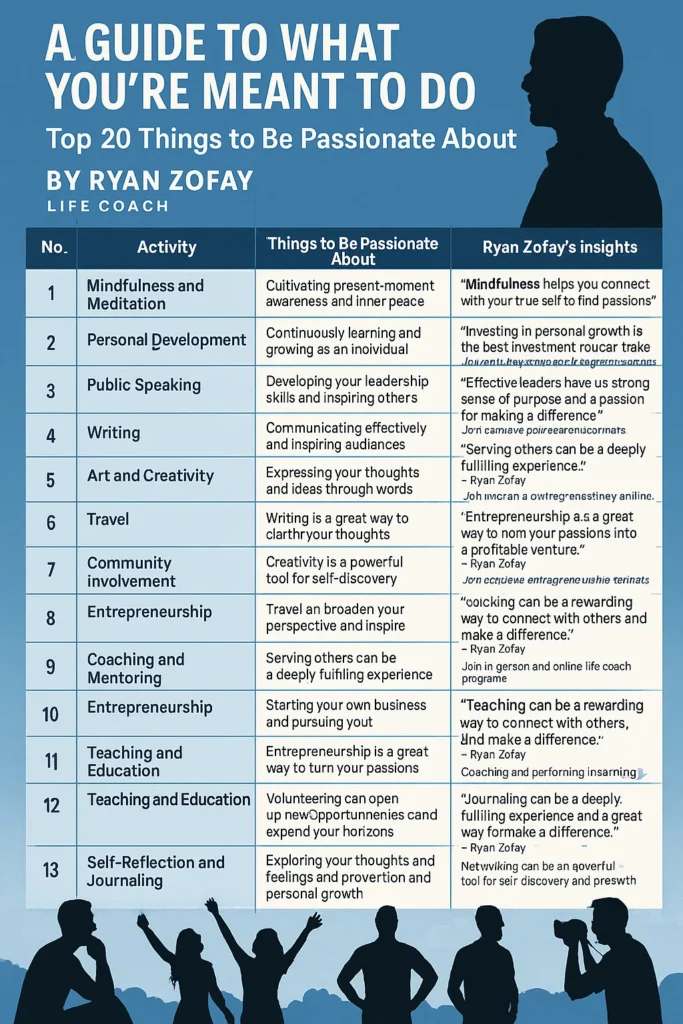
- Top 20 Things to Be Passionate About in Life
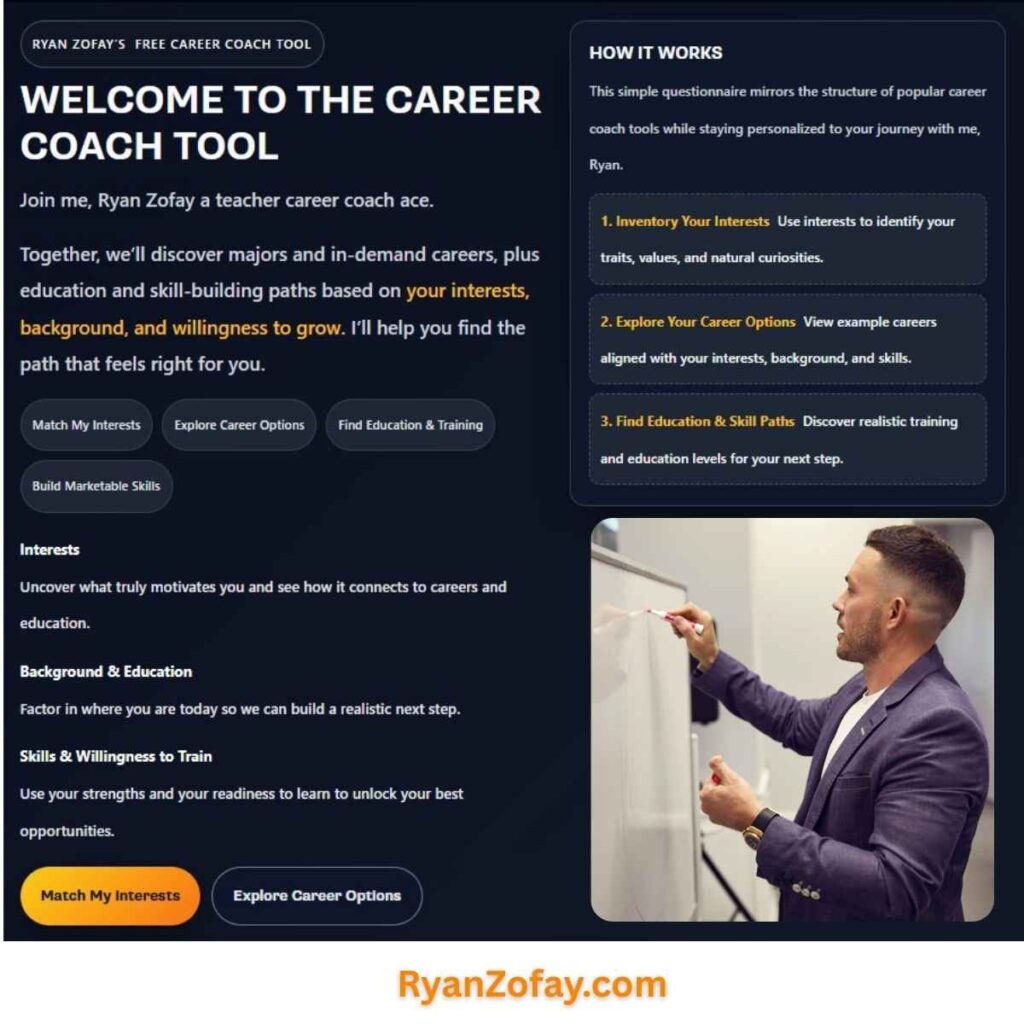
- Ryan Zofay Career Coach Page
