
By Ryan Zofay: I am a personal development expert and neuro-linguistic behavioral specialist. With over 20 years of experience, I’ve seen how clear, purposeful goals transform careers and lives. I rebuilt my life from childhood trauma leading to addiction and dropping out of school. I now help lead a nine-figure business network at We Level Up. I coach thousands through live events, workshops, and online programs. The strategies in this guide come from neuroscience-based principles that improve performance. They have worked for real teams and real companies. They also helped me grow and change in my personal and professional life.
What Are Personal Development Goals for Work – the Short Answer
Personal development goals for work help employees and managers improve skills, productivity, and career growth. They enhance leadership, communication, time management, and technical skills. These SMART goals are specific, measurable objectives improve performance, and career growth while adding more value to the organization. They support long-term success.
In this guide, you’ll find what personal development goals for work are. How to set them, with 70+ real examples you can use in your performance review, development plan, or daily routine. Each example includes practical tips so you can turn a goal into consistent action.
Jump To
Table of Contents
Guide to Personal Development Goals for Work
This guide blends proven goal‑setting frameworks with my real‑world experience as an entrepreneur and personal development coach. You’ll learn how to turn broad ambitions like “be a better leader” or “manage stress” into clear workplace goals. You can track them, measure them, and achieve them.
You can use these examples in performance reviews, individual development plans (IDPs), career planning, or self‑coaching. Adapt them to your role, your company’s priorities, and the personal growth areas that matter most to you.
Below are over 70+ examples of professional development goals for employees and managers. They also include tips to help you implement them successfully at work.
What Are Personal Development Goals for Work? In Detail
Personal development goals for work are objectives employees set to improve skills, productivity, leadership ability, and career growth. These goals help professionals build competencies that benefit both their career and their organization.
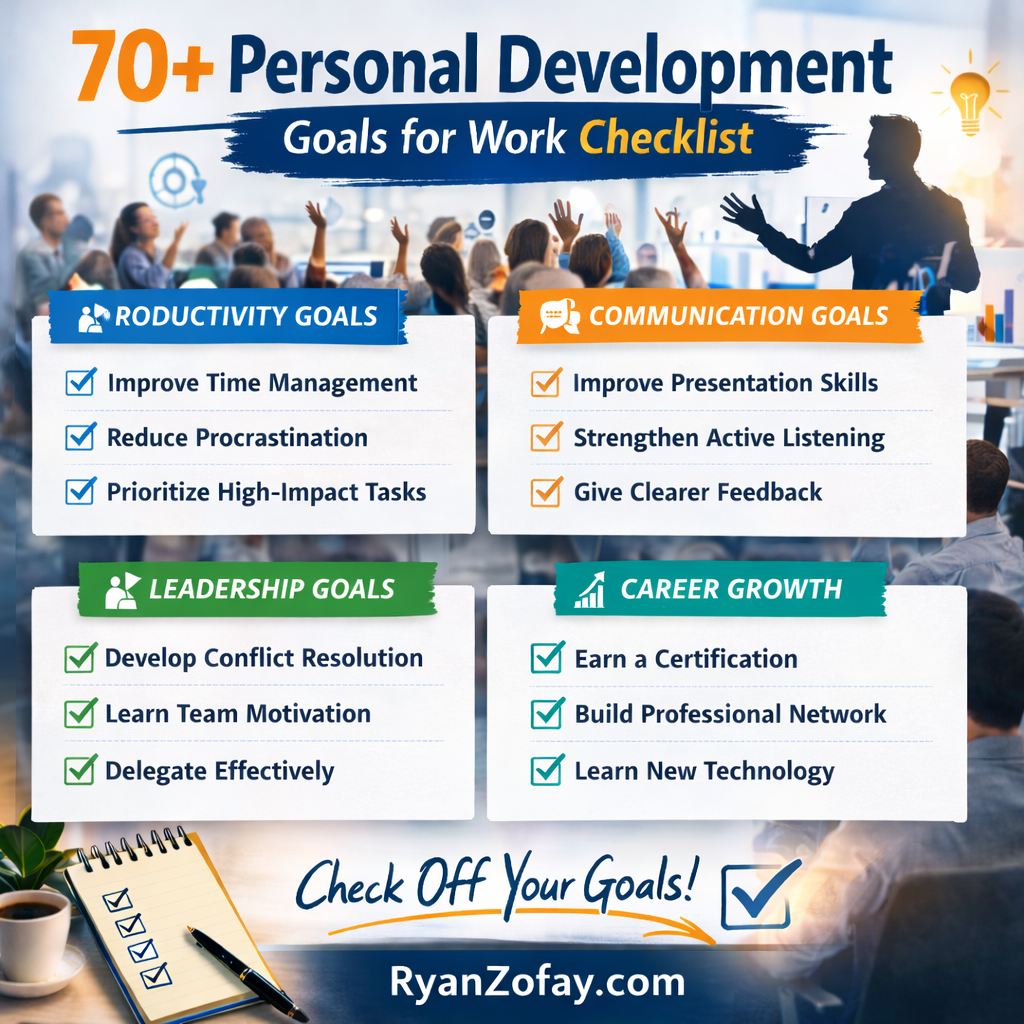
Common workplace development goals focus on:
- communication skills
- leadership development
- time management
- emotional intelligence
- technical expertise
Organizations encourage these goals because they increase engagement, productivity, and employee retention. When employees consistently develop their skills, they contribute more effectively to their teams and long-term company success.
The Power of Personal Development Goals
In this guide, I explain how personal development goals work. I also share how to set them well. I show how to adjust them for different roles and industries. You’ll see my own insights as a coach and entrepreneur, plus practical examples you can start using immediately.
Top 70+ Personal Development Goals for Work Examples
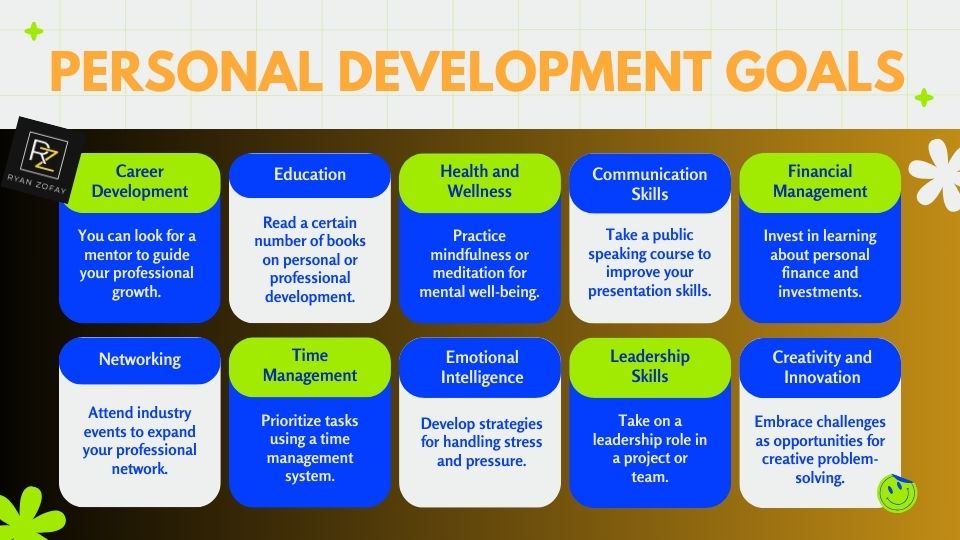
Personal development goals are objectives that individuals set to improve their skills, knowledge, and abilities in a professional context. They act as guidelines for people to enhance both hard and soft skills. These goals benefit individual career progression and contribute to the overall success and morale of the company. When individual ambitions align with company goals, it creates a win-win situation.
The 10 Most Popular Personal Development Goals for Work
Find below ranked by popularity examples of goals for work. Uncover my insights as a personal development expert and online life coach.
| Goal & Description | Example Goal | Insights, Tips & Activities by Ryan Zofay |
|---|---|---|
| Improve communication skills. Stronger communication helps you build trust, prevent misunderstandings, and influence more effectively. | Ask for feedback on your communication from your manager and one peer, then apply one change in every meeting for the next 60 days. | Record yourself in one key conversation or presentation and review how clearly you spoke and listened. Before important talks, write down your main point in one sentence—that clarity alone will transform how you communicate. |
| Enhance time management and productivity. Better time use allows you to get more meaningful work done without constant stress. | Plan your week every Sunday night, blocking time for your top three priorities each day. | Treat your calendar like a promise to yourself. Eliminate or delegate at least one low-impact task per week. Ask, “If I only got three things done today, what would matter most?” and start there. |
| Develop leadership skills. Leadership helps you inspire others, drive results, and grow into higher-impact roles. | Volunteer to lead a small project or meeting each month to practice guiding others. | You don’t need a title to lead. Look for moments to take responsibility, support teammates, and make decisions when others hesitate. Leadership grows every time you choose courage over comfort. |
| Increase confidence and self-esteem. Greater confidence helps you take smart risks, speak up, and pursue bigger opportunities. | Commit to sharing one idea, question, or suggestion in every team meeting for the next 8 weeks. | Confidence is built, not gifted. Keep promises to yourself, track small wins, and surround yourself with people who challenge and support you. Ask, “What would the confident version of me do right now?” then do that. |
| Improve problem-solving and critical thinking skills. Strong problem-solving helps you handle complexity and make better decisions. | Pick one recurring issue at work and use structured analysis to propose and test a new solution within 30–60 days. | Slow down before reacting. Ask “What is really causing this?” and “What options am I not seeing yet?” Write out the problem, possible causes, and solutions—you’ll be amazed what shows up when you get it on paper. |
| Enhance emotional intelligence. Higher emotional intelligence helps you manage your emotions and respond skillfully to others. | Practice naming your emotions three times per day and pausing before responding in challenging interactions. | Your emotions are signals, not enemies. Notice them without judgment and ask, “What is this feeling trying to tell me?” In conflicts, aim to understand before you aim to be understood. |
| Develop adaptability and resilience. Adaptability and resilience help you handle change and bounce back from setbacks. | Choose one new challenge outside your comfort zone this quarter and commit to seeing it through. | When life changes, ask, “How can I learn and grow from this?” Do not ask, “Why is this happening to me?” Real change starts when you choose to use pain as motivation. Do not use it as an excuse. |
| Expand professional knowledge and skills. Growing your knowledge keeps you competitive and opens new career paths. | Enroll in one relevant course or workshop and apply at least one new concept at work each week. | Become a lifelong student of your craft. Build a learning routine—articles, podcasts, or courses—and then use what you learn immediately. Implementation, not information, is what changes your career. |
| Network and build relationships. Strong relationships create new opportunities, support, and collaboration. | Schedule one coffee chat or virtual conversation each week with a colleague or industry contact. | Approach people with genuine curiosity. Ask about their goals and challenges, and look for ways to add value. Your network grows fastest when you stop chasing contacts and start building real connections. |
| Achieve work-life balance. Healthy balance supports sustainable success and prevents burnout. | Set a firm “shutdown” time each workday and protect one daily habit that recharges you. | High performance and burnout are not the same thing. Decide what matters most outside of work and honor it in your calendar. The version of you that rests and reconnects will always produce better results long term. |
Next Best 30 Personal Development Goals and Objectives Examples and Ideas
Personal development goals can focus on different areas. These include well-being, time management, social skills, and job skills. Setting and reaching personal development goals creates a space where accepted ideas can be questioned. This can lead to new ideas and improvements at work.
| Goal & Description | Example Goal | Coaching Insights, Tips & Activities |
|---|---|---|
| Strengthen everyday leadership behaviors. Focusing on daily leadership habits helps employees influence others positively, even without a formal title. | Take the lead on at least two team initiatives this year, practicing clear communication, delegation, and follow-through. | Treat every meeting as a leadership lab: volunteer to summarize action items, clarify priorities, and support others. Ask yourself daily, “Where can I step up just 1% more as a leader?” |
| Improve time management. Use better planning and prioritization to get more done with less stress. | Use a weekly planning system to prioritize tasks and reduce missed deadlines over the next quarter. | Block time on your calendar for deep work and protect it like a meeting. Do a 10-minute Friday review: what worked, what didn’t, and what to focus on next week. |
| Improve emotional intelligence. Build awareness of your own emotions and the emotions of others to communicate and connect more effectively. | Practice active listening and empathy exercises in every team meeting to strengthen emotional awareness. | Before hard talks, pause and ask, “What might they feel right now?” Write short journal notes about emotional triggers. Include what you learned from each situation. |
| Build conflict resolution skills. Turn disagreements into opportunities for alignment and solutions. | Learn a simple mediation framework and successfully resolve at least two workplace conflicts this year. | When conflict arises, separate people from the problem. Ask both sides, “What does a win–win look like for you?” Practice staying calm and curious instead of defensive. |
| Increase productivity. Boost your output on high-impact tasks without burning out. | Implement time-blocking to complete your top three priorities before noon four days per week. | Start every day by identifying your top three priorities. Eliminate one low-value activity for 30 days and notice the difference. |
| Improve public speaking. Speak with more confidence and clarity in front of groups. | Volunteer to deliver at least one presentation per quarter to your team or department. | Record yourself speaking for 3–5 minutes and watch it back. Focus on pausing, breathing, and eye contact. Remember: your job is to serve the audience, not to be perfect. |
| Learn a new professional skill. Keep your expertise fresh and relevant in a changing workplace. | Complete an online certification in a role-relevant tool or topic within the next six months. | Choose one skill that would move the needle most in your career. Schedule non-negotiable learning blocks and track your progress like a training plan. |
| Develop decision-making ability. Make clearer, faster, and more confident choices. | Use a clear decision framework (pros and cons plus data) for all major choices over the next quarter. | When stuck, ask: “What are my best three options? What’s the worst that could happen? What’s the next right step?” Train yourself to decide with 70% of the information, not 100%. |
| Improve teamwork. Collaborate more effectively and support collective success. | Join a cross-functional project and actively support at least two colleagues with their tasks. | In every team setting, ask, “How can I help others win?” Celebrate teammates’ successes in public. This builds trust and stronger partnerships. |
| Build networking skills. Create authentic relationships that open new opportunities. | Attend two industry events each quarter and follow up with three new contacts each time. | Approach networking as “How can I help?” not “What can I get?” After meeting someone, send a quick note with one resource, introduction, or encouragement within 24 hours. |
| Strengthen adaptability. Stay effective when things change quickly. | Take on one stretch assignment outside your comfort zone each quarter to practice flexibility. | When plans change, do not resist. Ask, “What is this here to teach me?” Write down three benefits of each major work change. |
| Enhance problem-solving. Diagnose root causes and create better solutions. | Identify one recurring issue at work and design, test, and refine a new solution within 60 days. | Use a simple “5 Whys” exercise to dig deeper into problems. Involve others in brainstorming; often the best solutions come from those closest to the front line. |
| Improve presentation skills. Deliver ideas in a way that captures attention and drives action. | Design a polished slide deck and deliver a 10-minute presentation to your team once a month. | Focus on structure: problem, insight, solution, next step. Keep slides simple. Practice out loud at least twice; confidence comes from repetition, not talent alone. |
| Strengthen strategic thinking. Connect daily actions to long-term goals and vision. | Create a six-month mini-strategic plan that aligns your projects with company priorities. | Regularly zoom out and ask, “How does this task support the mission?” Each month, review big-picture trends, not just daily to-dos. |
| Increase industry knowledge. Stay informed about trends, best practices, and competitors. | Read one industry article each workday and share one key takeaway with your team weekly. | Build a simple learning playlist of podcasts, blogs, or newsletters. Teach others what you learn; teaching is one of the fastest ways to deepen mastery. |
| Improve stress management. Protect your health so you can perform at your best. | Practice a 10-minute daily mindfulness or breathing routine during workdays for 60 days. | Notice your early stress signals. Take micro-breaks of 2–3 minutes for breathing, stretching, or walking to reset your nervous system. |
| Develop mentoring skills. Help others grow while sharpening your own leadership. | Mentor a junior colleague for three months and set biweekly check-ins to support their growth. | Ask powerful questions instead of giving quick answers. Co-create goals with your mentee and celebrate small wins together. |
| Improve feedback skills. Give and receive feedback in a way that builds trust and growth. | Schedule monthly feedback conversations with a peer and agree on one improvement action each time. | Use the formula: observation, impact, suggestion. When receiving feedback, listen fully, thank the person, and decide what you’ll apply instead of defending yourself. |
| Strengthen creativity. Generate fresh ideas and see problems from new angles. | Propose three new ideas each quarter that improve efficiency, client satisfaction, or culture. | Set aside idea time each week with no judgment, just brainstorming. Expose yourself to different fields; great ideas often come from outside your industry. |
| Build confidence. Believe in your ability to take on bigger challenges. | Commit to speaking up with at least one idea or question in every team meeting for 90 days. | Confidence grows from keeping promises to yourself. Start with small commitments, follow through, and let that track record reshape how you see yourself. |
| Develop adaptable thinking. Shift your perspective quickly when circumstances change. | When plans change, identify three potential opportunities instead of focusing only on what’s lost. | Catch yourself in all-or-nothing thinking. Train your mind to ask, “What else could be true here?” to open new options. |
| Improve written communication. Write clearly and professionally so your ideas land. | Take a short writing course and apply new techniques to all emails and reports for one month. | Before you send anything important, reread it and ask, “Is this clear, concise, and kind?” Use short paragraphs. Include clear calls to action. |
| Cultivate integrity. Align your actions with your values, even when it’s hard. | Align your actions with your stated values and own any mistakes immediately with your team. | Do private check-ins: “Did my actions today match who I say I am?” Admit mistakes quickly and focus on making them right. |
| Develop a growth mindset. See challenges as chances to learn instead of proof you can’t. | Choose one weakness to reframe as a skill in progress and track small improvements weekly. | Replace “I can’t do this” with “I can’t do this yet.” Review past setbacks and extract lessons to train your brain to see growth instead of failure. |
| Enhance listening skills. Truly hear others to build trust and reduce misunderstandings. | In conversations, summarize what others said before responding to ensure clarity and respect. | In your next three conversations, talk less than you listen. Put your phone away and give people full attention to instantly elevate your relationships. |
| Develop resilience. Bounce back stronger from setbacks and adversity. | Keep a weekly reflection journal on setbacks, what you learned, and how you’ll adjust. | Ask, “How can I use this experience to become stronger, wiser, and more compassionate?” Turning pain into purpose is how you rewrite your story. |
| Improve work-life balance. Protect your energy so you can succeed in work and life. | Set a daily end-of-work cutoff time and protect one personal non-negotiable activity each day. | Schedule your recharge time like an important meeting. When you’re off, be fully off—presence with family, health, and rest fuels your next level of success. |
| Develop initiative. Act without waiting to be told, and become known as a problem-solver. | Identify one area for improvement at work and pitch a simple solution to your manager this month. | Don’t wait for the perfect plan. Start small, take action, and iterate. Initiative is one of the fastest ways to get noticed for bigger opportunities. |
| Enhance cultural awareness. Respect and leverage differences to build stronger teams. | Participate in at least one cross-cultural training or event and apply one insight with your team. | Get curious about others’ backgrounds and perspectives. Ask open-ended questions and listen without judgment to turn diversity into a real advantage. |
| Cultivate accountability. Own your commitments, results, and growth. | Set clear weekly goals, share them with a colleague, and review progress together every Friday. | Create simple scoreboards for your goals. When you miss a target, skip the excuses and ask, “What will I do differently next time?” That’s how accountability builds powerfully over time. |
Ryan’s top 10 unique, clever personal development objectives for work examples
Bonus 10 Unique Effective Personal Development Goals for Work Examples
Let’s face it – in today’s fast-paced, ever-evolving business world, the same old career goals for work advancement just don’t cut it anymore. It’s time to think creatively and set unique personal development goals. These goals can help your career and improve your work experience.
As someone who has built a 9-figure empire, I’ve learned that real growth often comes from surprising places. That’s why I’ve curated this list of Unique and Effective Personal Development Goals for Work Examples. These aren’t your typical “increase productivity by 10%” or “attend three networking events” goals. No, we’re diving into the realm of the innovative, the slightly unconventional, and the powerfully transformative.
Here is a table of my top ten unique personal development goals for work. It includes insights from Ryan Zofay, a personal development expert
| Goal & Description | Example Goal | Coaching Insights, Tips & Activities |
|---|---|---|
| Develop a transformative leadership mindset. See challenges and failures as catalysts that shape you into a stronger, wiser leader. | Identify one big challenge you face. Write how it can help you grow and lead over the next year. | Instead of asking “Why me?”, start asking “What is this building in me?” The leaders who transform organizations are the ones who first transform how they interpret adversity. |
| Practice mindfulness decision-making. Slow, conscious decision-making helps you respond with clarity instead of reacting on autopilot. | Before you make one important decision each day, pause for 60 seconds. Breathe, notice your emotions, and clarify your intention. | Give yourself a gap between stimulus and response. In that gap, check in: “What outcome do I really want?” The more present you are, the better your decisions become. |
| Enhance cross-cultural competence. Understanding diverse perspectives leads to better collaboration and innovation. | Join a cross-cultural project or initiative and intentionally learn at least three new perspectives from teammates. | Be curious, not certain. Ask people from different backgrounds how they see a problem and what solutions they’d suggest. Inclusion isn’t a buzzword—it’s a competitive advantage. |
| Improve financial literacy. Understanding the numbers helps you make better career and business decisions. | Learn the key financial metrics in your company or industry and track them monthly for the next quarter. | Money is a language. When you learn to read financial statements and metrics, you stop guessing and start making strategic moves that grow your impact and income. |
| Build a story brand. Craft a clear personal and professional story that communicates who you are and how you help. | Write a one-paragraph “about me” that explains your journey, your values, and the problems you love solving. | People remember stories, not bullet points. Share where you came from, what you’ve overcome, and why you care about what you do. Your authenticity is your greatest marketing asset. |
| Practice radical honesty. Speaking truth with compassion builds deep trust and stronger relationships. | Choose one relationship at work where you’ve been holding back and have a courageous, respectful truth-telling conversation. | Radical honesty doesn’t mean being harsh; it means being real. Express what you see and feel while also caring deeply about the person. That combination transforms teams. |
| Develop digital literacy. Becoming fluent with digital tools keeps you agile and valuable in a fast-changing world. | Pick one key platform or tool in your role and commit to becoming advanced at it over the next 90 days. | Don’t resist technology—ride the wave. Experiment, click around, ask questions, and practice daily. The more comfortable you are with digital tools, the more leverage you have. |
| Master your emotions. Learning to regulate your emotions allows you to stay grounded under pressure. | When you feel triggered at work, take three deep breaths, name the emotion, and choose one productive action. | Your emotions don’t have to drive the car; they can ride in the back seat. When you can feel a feeling without being controlled by it, you gain real power over your life. |
| Cultivate a self-improvement mindset. See every day as an opportunity to grow, refine, and upgrade who you are. | Set one small daily improvement goal (communication, health, focus) and track it for 30 days. | Ask yourself each night, “How did I grow today?” It doesn’t have to be huge. Consistent micro-improvements, stacked over years, create what most people call “overnight success.” |
| Cultivate a sustainability growth mindset. Aim for growth that’s not only fast, but healthy and responsible for the long term. | Choose one habit at work that is not sustainable and replace it with a healthier, more balanced approach this month. | Growth at any cost eventually costs you everything. Build goals that honor your health, your values, and the impact you’re making on others. That’s how you win long term. |
Ryan’s top 10 unusual, compelling personal development goals in the workplace
Bonus 10 Unusual Personal Growth and Development Goals
Hey there, growth seekers and life adventurers! It’s Ryan Zofay, and I’m thrilled to take you on a journey beyond personal development. We’ve all heard about setting SMART goals, practicing gratitude, and mastering time management. What if I told you that real change often comes from the unexpected, the unusual, and even the strange?
In my journey from rock bottom to building a life beyond my wildest dreams, I found deep growth. It often comes from embracing the unusual. I’ve compiled this list of Top 10 Unusual Personal Growth and Development Goals. These are not ordinary self-help tips. They are bold, sometimes quirky, and always strong strategies. These can change your routine and help you grow in new ways.
Here is a table of unique personal development goals for the workplace. I will also share my insights as a personal development expert.
| Goal & Description | Example Goal | Coaching Insights, Tips & Activities |
|---|---|---|
| Cultivate strategic thinking. Learn to see the big picture and connect daily actions to long-term outcomes. | Once a month, map how your current projects support your organization’s 6- to 12-month goals. Identify one improvement. | Don’t just ask, “What do I need to do today?” Ask, “How does this move the mission?” Step back regularly, look at patterns, and make adjustments based on where you want to be, not just where you are. |
| Master the art of constructive feedback. Turn feedback into a powerful tool for growth instead of something to fear. | Choose one teammate and commit to a monthly, two-way feedback check-in focused on growth, not blame. | When giving feedback, aim to help, not hurt: be specific, kind, and honest. When receiving feedback, listen, thank them, and decide what you’ll apply. That’s how you become unshakeable. |
| Develop emotional agility. Adapt your emotional responses to different situations without losing your authenticity. | For the next 30 days, notice one emotional trigger per day and choose a more helpful response than your usual reaction. | You don’t have to be a prisoner of your first reaction. Pause, name what you feel, and ask, “What response would serve me and others best right now?” That flexibility is emotional strength. |
| Enhance your personal brand. Intentionally shape how others experience you and your work. | Define three words you want people to associate with you at work and act in alignment with them every day for 60 days. | Your personal brand is built when you’re not in the room. It’s the trail your actions, attitude, and communication leave behind. Design it on purpose instead of leaving it to chance. |
| Improve cross-functional collaboration. Break down silos by working effectively with other teams and departments. | Join or initiate one cross-functional project and learn how another team operates and measures success. | Ask other departments, “What does success look like for you?” When you understand their world, you can create win–wins instead of power struggles. That’s how you become indispensable. |
| Master the art of personal growth. Treat your entire life as a continuous training ground for becoming your best self. | Create a simple weekly review ritual: what you did well, what you learned, and what you’ll do differently next week. | Don’t wait for massive life events to change you. Use each day—wins and losses—as a chance to grow. The compound effect of daily growth will take you further than any single breakthrough. |
| Cultivate a learning mindset. Stay open, curious, and willing to upgrade your beliefs and skills. | Once a week, intentionally learn from someone who disagrees with you or sees things differently. | Curiosity is more powerful than certainty. Ask more questions, listen more than you talk, and be willing to say, “I was wrong.” That’s how you keep evolving instead of staying stuck. |
| Enhance your adaptability quotient. Strengthen your ability to thrive in changing environments and expectations. | When a big change happens at work, write down three possible benefits. Then list one helpful action you can take right away. | The world doesn’t slow down for our comfort. Instead of resisting change, choose to become someone who can pivot quickly, learn fast, and lead others through uncertainty. |
| Master the art of public speaking and leadership. Use speaking as a vehicle to lead, inspire, and influence. | Commit to one speaking opportunity per month, even if it’s a small team update or meeting kickoff. | Speaking is leadership in motion. Focus less on looking perfect and more on serving your audience. Share real stories, real lessons, and real emotion—that’s what moves people. |
| Apply transformative leadership in daily actions. Live the principles of transformative leadership in small, consistent ways. | Each day, choose one action. Listen deeply, encourage someone, or own a mistake. This should reflect the leader you want to be. | Transformation doesn’t just happen on big stages or in crisis moments. It happens in the quiet decisions you make daily. Lead by example when no one is watching, and everything around you will start to shift. |
Ryan’s top 10 goals for work advancement
Bonus 10 surefire goals for work advancement
I’ve learned that setting clear, ambitious goals for work advancement is crucial for career progress and overall job success. These goals have been key in my journey. They helped me overcome work challenges and build a successful career. I also help others do the same. Here, I share my top 10 goals for work advancement and the insights I’ve gained through my experiences. These goals and insights are designed to inspire and guide you on your own path to professional growth and fulfillment.
| Goal & Description | Example Goal | Coaching Insights, Tips & Activities |
|---|---|---|
| Continuous skill development. Ongoing learning keeps you relevant and opens doors to higher levels of responsibility and income. | Identify one high-impact skill for your role and complete a course or certification on it within the next 6 months. | Never stop being a student. Make a simple learning plan: what you’ll study weekly, how you’ll practice it, and how you’ll measure progress. The marketplace rewards people who grow faster than their problems. |
| Expand professional network. A strong network creates opportunities, support, and faster career growth. | Attend one networking event or schedule one new professional coffee chat each week for the next 8 weeks. | Treat your network like a garden—plant seeds consistently. Ask people about their goals, listen deeply, and look for one way you can help. The more value you give, the more doors open. |
| Embrace leadership opportunities. Taking on leadership roles helps you grow influence, confidence, and advancement potential. | Volunteer to lead at least one project, initiative, or meeting each quarter. | Don’t wait to be chosen. Step up when something needs to be organized, decided, or communicated. Every time you raise your hand, you are casting a vote for your future as a leader. |
| Set and achieve measurable targets. Clear, measurable goals make your progress visible and keep you focused. | Break a major career goal into 3–5 measurable milestones and track them weekly for the next 90 days. | Vague goals create vague results. Define exactly what you want, by when, and how you’ll measure it. Celebrate small wins; momentum is built one completed milestone at a time. |
| Develop emotional intelligence. Understanding and managing emotions helps you navigate conflict, pressure, and relationships at work. | Ask two trusted colleagues for feedback on how you handle stress or conflict and choose one specific behavior to improve. | When emotions are high, slow down. Breathe, notice what you feel, and choose your response instead of reacting. Emotional mastery is a secret advantage in leadership and advancement. |
| Cultivate a growth mindset. Seeing challenges as opportunities makes you more resilient and promotable. | Each week, write down one setback and one lesson you took from it, then decide one new action to apply. | Replace “Why is this happening to me?” with “What is this teaching me?” The people who rise are not the ones who never fall, but the ones who refuse to stay down or stop learning. |
| Seek regular feedback. Honest feedback accelerates your growth and helps you correct course quickly. | Schedule a brief feedback conversation with your manager once a month focused on one specific skill or project. | Feedback is not an attack; it’s a shortcut. Ask targeted questions like, “What is one thing I could do better?” Listen fully, write it down, and show improvement the next time. |
| Contribute beyond your role. Going above and beyond shows you’re ready for bigger responsibilities. | Identify one project outside your formal job description and offer to support or improve it this quarter. | Look for problems no one owns yet and start solving them. Advancement often goes to the person who already behaves like they’re in the next role before they have the title. |
| Build your personal brand. A clear, consistent professional reputation attracts opportunities and trust. | Update your professional profiles. Share one value-packed post each week. Say yes to one speaking or presenting opportunity this quarter. | Decide what you want to be known for, then act in alignment with that every day. Your personal brand is built in the small moments: how you show up, communicate, and follow through. |
| Maintain work-life balance. Sustainable success requires protecting your health, relationships, and energy. | Choose one must-do habit, like exercise, family dinner, or journaling. Block time for it on your calendar for the next 30 days. | Burning out is not a badge of honor. When you care for your body, mind, and relationships, you do better, think more clearly, and enjoy the success you seek. |
As you pursue your goals for work advancement, look beyond just climbing the corporate ladder. Execute your objectives to become the most professional best version of yourself. Each goal is interconnected, creating a holistic approach to work advancement. Stay true to your values and purpose. True success comes when your work aligns with your mission and contributes positively to the world around you.
Your goals should be integrated into daily work tasks. You can do this by setting aside time for skill-building activities. You can also choose projects that match your personal growth goals. Time constraints and a lack of motivation are common challenges in achieving personal development goals. These can be addressed through precise planning and seeking support from team leaders and colleagues.
Companies benefit from supporting employees’ personal development goals through increased employee engagement, retention, and productivity. You can track your progress on personal development goals by having regular check-ins. Use self-assessments and get feedback from colleagues and supervisors.

Claim Your Call
Claim your free next level strategy call. Select your date and time. Get guidance and insights. Find answers to your questions. Gain focus, and belief in yourself with No excuses holding you back.

Join the 1%
Seize opportunity. Make the Most of Your Life! Live Without Limitations. Overpower Challenges. Grasp Opportunities to make the Most of Each Moment. Propel & Surpass Others.
Personal Development Goals for Employees & Leaders Skill Building
Join me as we explore the art and science of building the skills that turn employees into leaders. I’ll share practical insights and proven strategies that have helped thousands of followers achieve professional breakthroughs. Along the way, you’ll find clear examples of workplace skills and personal growth goals. You can adapt them to your career. These include emotional intelligence, communication, time management, and decision-making.
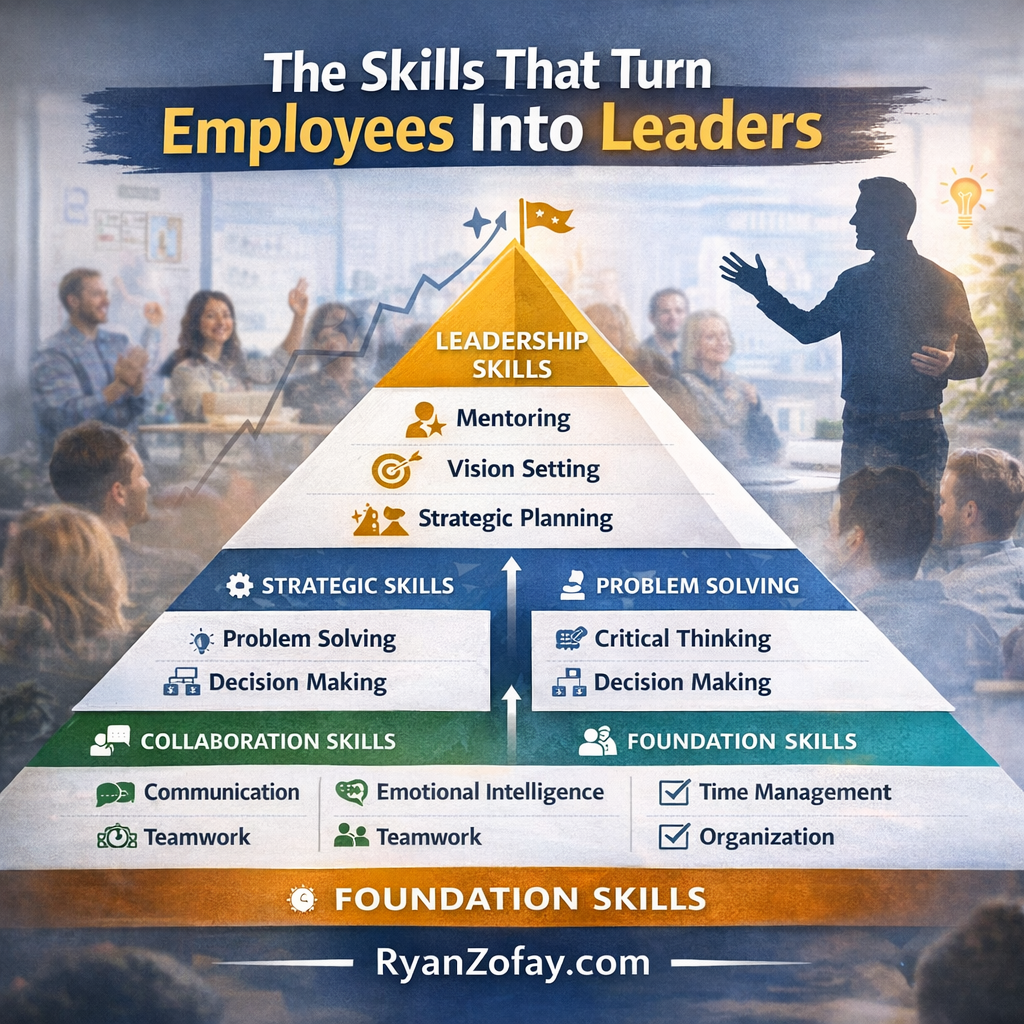
High performers rarely succeed by chance. They develop a progression of workplace skills that support long-term growth. Foundational habits like organization, reliability, and time management create consistency.
Collaboration skills such as communication, teamwork, and emotional intelligence help professionals work effectively with others. Strategic thinking—problem solving, critical thinking, and decision making—drives meaningful results. At the highest level, leadership skills like mentoring, setting a clear vision, and planning help people guide teams and drive success.
The journey of personal development is unique to each individual. What works for one person may not work for another. That’s why tailoring your goals to your specific needs, values, and aspirations is crucial. As we dive into this topic, I encourage you to approach it with an open mind and a willingness to challenge yourself.

Crafting Personal Development SMART Goals
Setting individual growth objectives can seem daunting. However, using the SMART goals criteria can make this process manageable and effective. SMART stands for Specific, Measurable, Achievable, Relevant, and Time-bound. Let’s break SMART goals for personal development:
- Specific: Define clear and specific goals. Avoid vague statements.
- Measurable: Ensure that your progress can be tracked with quantifiable metrics.
- Achievable: Set realistic goals that challenge you but are attainable.
- Relevant: Align your goals with your personal and professional aspirations.
- Time-bound: Set deadlines to create a sense of urgency and accountability.
Example SMART goal: Instead of saying “improve leadership,” a SMART goal would be:
“Complete a leadership development course and lead one cross-department project within six months.”
By applying the SMART criteria, you can create a structured plan that enhances your chances of success. This framework helps define clear goals and ensures every step aligns with your larger objectives.
Personal Development Goals for the Workplace
Personal development goals in the workplace are essential for career progression and job satisfaction. Here are some examples of short-term and long-term goals tailored to various professions:
Short-term Goals:
- Improve time management skills by using productivity tools like Trello or Asana.
- Enhance public speaking abilities by attending workshops or joining a Toastmasters club.
- Learn new software relevant to your field within the next three months.
Long-term Goals:
- Achieve a leadership position within five years by taking on more responsibilities.
- Obtain an advanced certification or degree related to your profession.
- Develop a network of industry contacts to facilitate career growth.
By setting these goals, professionals at any level can improve their skills. They can also increase their value to their organization and find more career satisfaction.
The Impact of Achieving Your Goals
Reaching your personal growth goals can profoundly affect your professional and personal life. Here are some ways these objectives can enhance your career progression and personal satisfaction:
- Career Advancement:
- Demonstrating a commitment to personal growth can make you a more attractive candidate for promotions and new job opportunities.
- Improved skills and knowledge can lead to better job performance and higher productivity.
- Personal Satisfaction:
- Achieving your goals provides a sense of accomplishment and boosts self-esteem.
- Continuous learning and growth contribute to overall well-being and happiness.
The dual impact on career and personal life makes pursuing personal growth goals worthwhile.
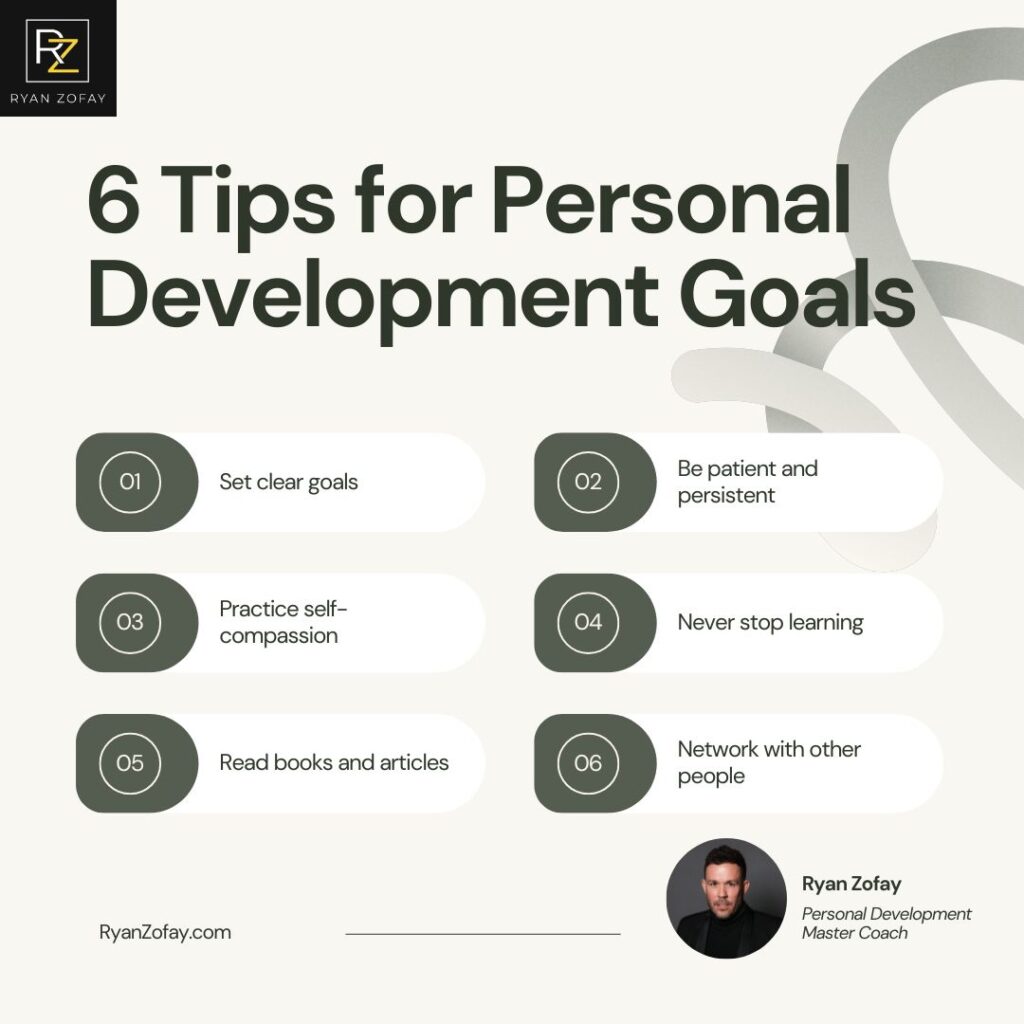
6 Tips for Personal Development Goals
These tips and ideas are great personal development goals. They are for both managers and non-managers who want to grow in their careers.
Top 6 good personal development goals for work
6 Unique Tips for Personal and Professional Development Goals
Reflect and Adjust: Regularly reflect on your progress and adjust your goals. Be willing to adapt your plans as circumstances change.
Leverage Technology: Utilize online courses, apps, and tools to support your development goals. Countless resources are available to help you learn new skills and improve your knowledge.
Practice Mindfulness: Incorporate mindfulness techniques into your daily routine. Mindfulness can help you stay focused, reduce stress, and improve your well-being.
Seek Mentorship: Find a mentor to offer guidance, support, and advice. A mentor can provide valuable insights and help you navigate challenges.
Step Outside Your Comfort Zone: Challenge yourself to try new things and step outside your comfort zone. This can help you develop new skills, build confidence, and increase resilience.
Practice Self-Care: Prioritize self-care activities that help you relax, recharge, and maintain a healthy balance. Taking care of yourself is essential for sustained personal and professional growth.
Achieve Personal Development Objectives for Work & Life
Experience transformation at Ryan Zofay’s empowering development and growth seminars. Watch and listen to examples of how personal development goals can be accomplished with group and coaching support.

Accomplish your personal Development Objectives.
“When you prioritize personal growth and invest in yourself, obstacles may surface, but don’t sweat the small stuff. Stay focused on your journey to self-improvement and resilience.” – Ryan Zofay, personal development coach and mentor.
Tune in to sample personal development goals for work at these incredible events. For those who need a push, learn how to get motivated and inspired to sustain your continuous improvement activities at Ryan’s personal development objectives for work seminars and courses.
Uncover personal development objective ideas
Join powerfully transformative experiences at Ryan Zofay’s exclusive personal development work goals workshops. Discover examples of personal growth and development goals to enhance your well-being, skills, and mindset.

PHENOMENAL Day 2 of Personal Development Seminar!
A message from Ryan Zofay, “Hats off to all who joined us—your commitment to yourself shines through! Empowering you is my calling, my purpose. Your trust and presence fuel my journey.
THANK YOU for being here.
In our nurturing space, you will find relevant examples of personal development goals for work. Rest assured, you are valued and embraced. You are cherished, always!”
Strategies for Setting and Achieving Personal Development Goals
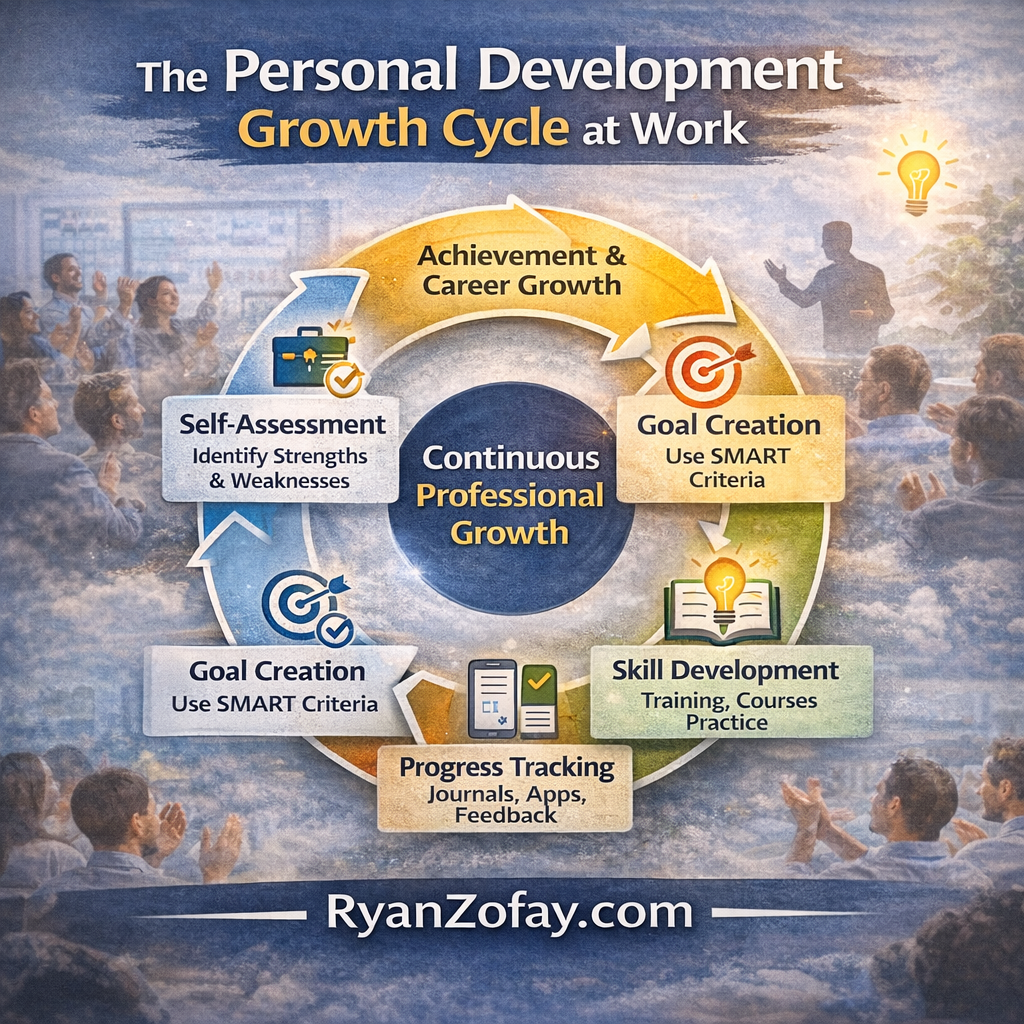
Now that you know why personal development goals matter and have some examples, let’s look at ways to set and reach them. Here are practical tips for drafting, tracking, and attaining your goals:
Drafting Goals:
- Start with self-assessment to identify areas for improvement.
- Use the SMART criteria to write down precise and actionable goals.
Tracking Progress:
- Utilize tools like journals, apps, or spreadsheets to monitor your progress.
- Set regular check-ins to review and adjust your goals as needed.
Attaining Goals:
- Break down larger goals into smaller, manageable tasks.
- Seek support from mentors, colleagues, or professional coaches like Ryan Zofay.
Personal Development Objectives Examples Worksheet

Implementing these strategies can turn your goals into achievable milestones, guiding you toward continuous improvement.
Professional Development Goals for Managers
Managers should focus on goals that improve leadership effectiveness and team performance. Examples include:
Examples include:
- mentoring team members
- improving decision-making
- strengthening conflict resolution
- developing strategic planning
- improving team motivation
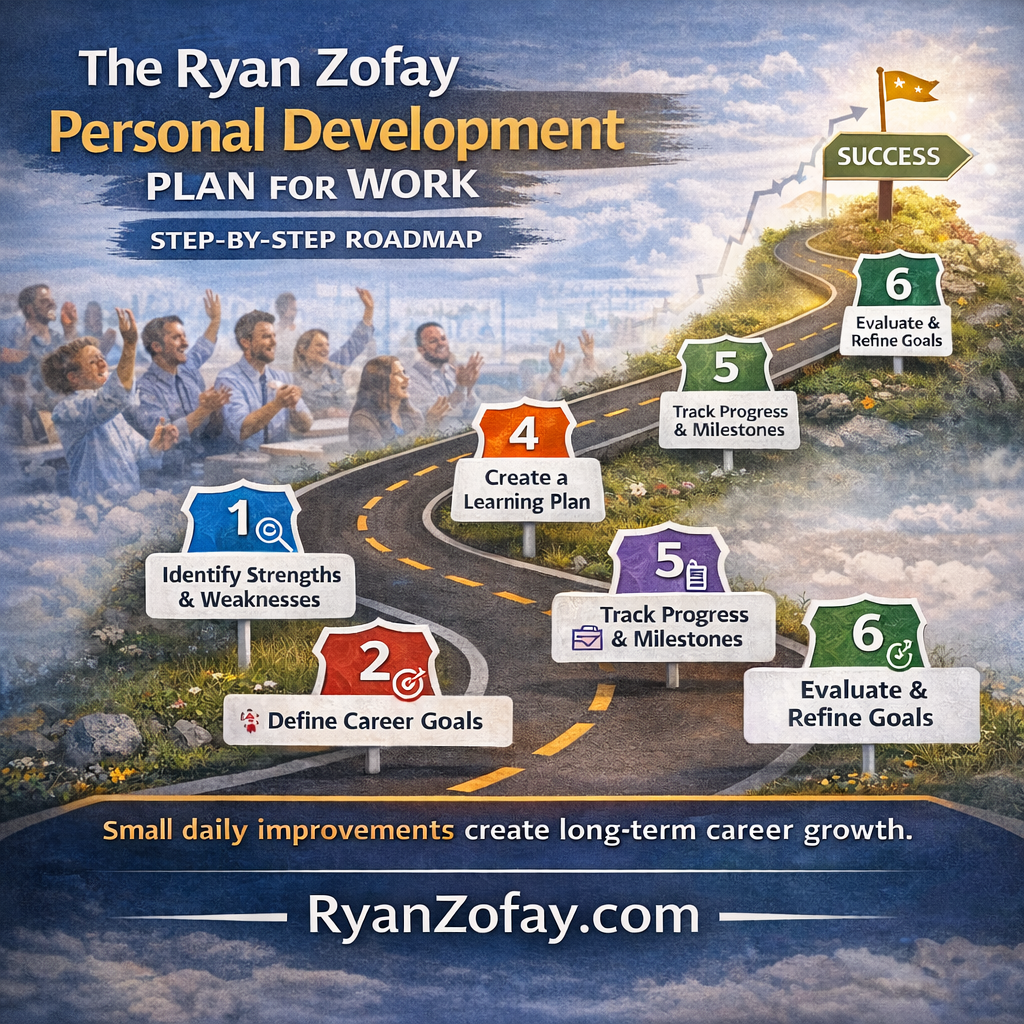
Follow the Ryan Zofay Personal development plan for work. It’s a six-step career growth roadmap anyone can apply.
FAQ
What are examples of personal development goals at work?
Examples include improving communication skills, learning new software, strengthening leadership ability, and improving time management.
What are good professional development goals?
Good professional development goals focus on measurable skills such as leadership, productivity, emotional intelligence, or industry expertise.
Why are development goals important in the workplace?
Development goals help employees improve performance, increase engagement, and prepare for career advancement.
How do I choose personal development goals at work?
How many personal development goals should I set?
How do I track progress on my development goals?
Should my personal development goals align with company goals?
Takeaways
Setting personal development goals is a powerful way to take control of your career and personal growth. By using the SMART criteria, you can see how reaching these goals can help you. With practical strategies, you can make big improvements in your work and personal life.
Don’t wait for tomorrow to start your journey of personal development. Begin setting your goals today and take the first step towards a better and more fulfilling future.
Transform Your Career
Transform Your Career with Ryan Zofay’s Guide to Personal Development Goals. In an ultra-competitive work environment, the need for personal and professional growth has never been more crucial. When set and pursued well, personal development goals can help you have a rewarding career and a happy life. No matter your job title, setting personal development goals can help you succeed. This applies to executives, managers, and those just starting their careers.
Are you ready to unlock your full potential and become the best version of yourself? Let’s start this exciting journey of personal growth together. We will use strong goal-setting techniques and inspiring examples to motivate you to take action today.
Resources Bonus Section
Check out Ryan Zofay’s website for personalized coaching workshops. For those eager to explore further, here are some valuable resources for development:
- A Personal Mastery Guide To Be Yourself. Discover How To Be The Best Version Of Yourself?
- Personal Growth Guide for the Best Books, Classes, Courses, Examples, Activities, & Quotes.
- Are You Working on Personal Development?
- 5 Areas of Personal Development
- Step-By-Step Easy Guide How to Master Your Emotions
- Guide to Self Improvement Strategies, Tips, Laws, Setting Goals, Journaling, Courses & Classes
These resources can provide additional insights and tools to help you on your path to personal and professional growth.
By adding these strategies and resources to your routine, you can make personal growth real. You can move toward a more successful and satisfying life.

Pingback: Val