
About the author: Ryan Zofay is a neuro-linguistic and neuroscience specialist. He is a peak performance coach at the Zofay Peak Performance Training Center in Deefield Beach, FL. Training clients to reach lasting high achievement through identity-based change and subconscious reprogramming.
With decades of experience helping thousands of entrepreneurs, professionals, and people in recovery, he uses neuroscience-based strategies, personal development, and mindset coaching. Improving clarity, emotional resilience, and long-term results. His work helps people change long-standing patterns. He helps them build steady habits to get clear results in business, mental health, and personal growth.
Peak Performance: Why 80% Fail & How to Succeed
Uncover why peak performance does not last for most people. Learn how to build lasting success using proven mindset strategies, science, and coaching.
Most people want top performance, but they struggle to keep it. They feel strong one day and stuck the next. This cycle is common in business, recovery, and daily life. The problem is not effort. The problem is how the mind works deep inside. Many people search for answers, but they miss the root cause. A trusted place to begin this journey is the Ryan Zofay Peak Performance Institute and coaching center.
Jump To
Table of Contents
What Is Peak Performance?
The peak performance meaning is simple. It means reaching your highest level of mental, emotional, and physical ability. It happens when your mindset, habits, and actions align.
True peak human performance includes:
- Emotional control. Emotional regulation under pressure.
- Clear thinking. Mental clarity and focus.
- Strong consistent habits and discipline.
- Strong decision-making ability.
- Healthy relationships.
High performers do not rely on temporary motivation. They operate from a structured internal system built on identity and behavior to support long term success.
As a performance coach I teach this concept in my Innerworld Mastery masterclass. Enhancing, re-wiring your innerworld mindset can help propel your success.
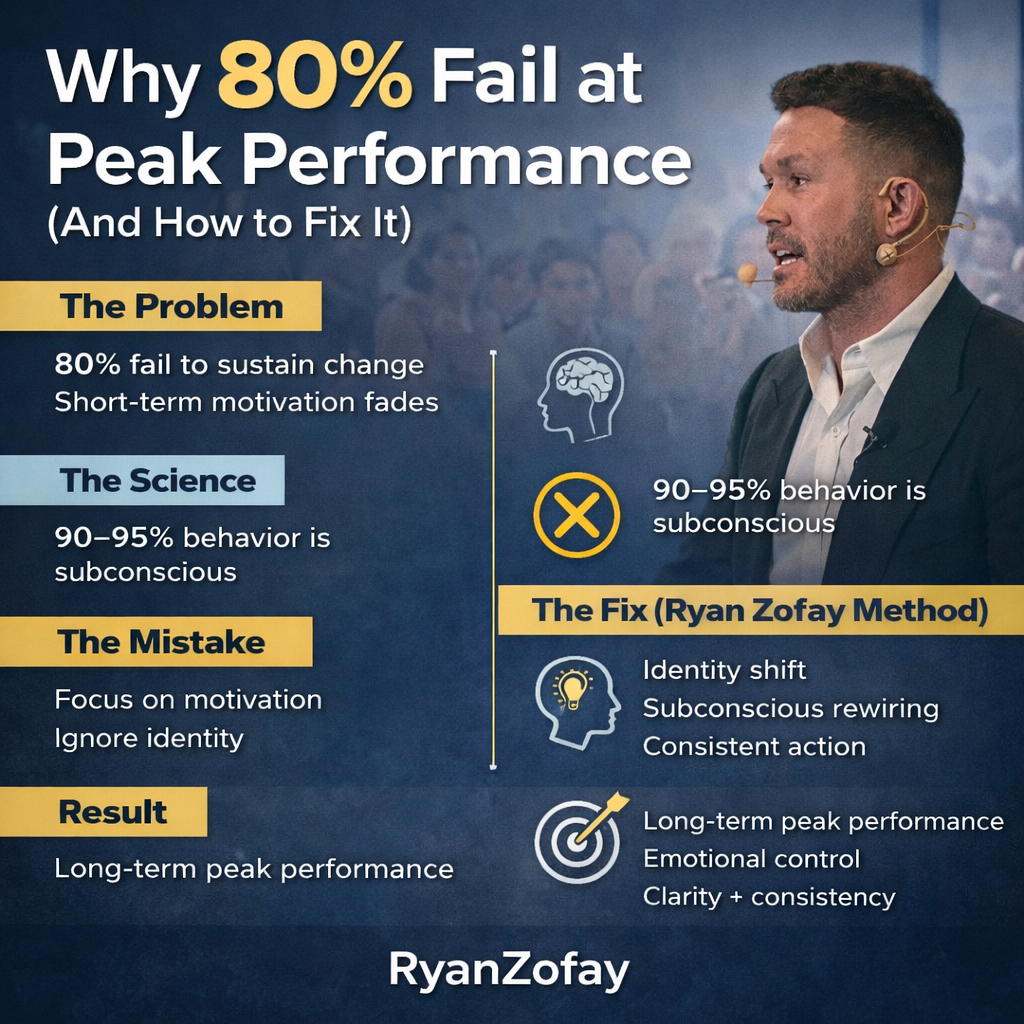
Why 80% Fail to Sustain Top Performance
Many people try to improve using tips, videos, or a peak performance book. They feel inspired for a short time. Then they fall back.
The core reasons people fail:
- They focus on actions instead of identity
- They rely on motivation instead of systems
- They ignore subconscious patterns
- They do not build repeatable habits
Research shows that up to 90–95% of behavior is subconscious. At the same time, nearly 80% of people fail to sustain long-term change. This gap explains why progress does not last.
Even high-level peak performers can feel stuck when they do not address these deeper patterns. In closing, short-term success is easy. Long-term performance requires internal change.
Achieving Peak State
To achieve peak performance, one must balance psychological mastery, biological efficiency, and strategic execution. Here are 10 essential terms that define the modern high-performance landscape:
- Flow State: A mental state where a person doing an activity feels fully focused, involved, and energized.
- Deep Work: The ability to focus without distraction on a cognitively demanding task. It allows you to quickly master complicated information and produce better results in less time.
- Ultradian Rhythms: Biological cycles of approximately 90 to 120 minutes that occur within a 24-hour day. High performers time their work to these cycles, taking breaks when energy naturally dips.
- Neuroplasticity: The brain’s ability to reorganize itself by forming new neural connections throughout life. This is the biological foundation for skill acquisition and habit formation.
- Heart Rate Variability (HRV): A physiological marker of the variation in time between each heartbeat. High HRV is often an indicator of a well-recovered nervous system and high stress resilience.
- Deliberate Practice: A highly structured type of training. It focuses on improving specific parts of performance through feedback and repetition.
- Cognitive Load: The total amount of mental effort being used in the working memory. Peak performance requires minimizing “extraneous” load (distractions) to focus on “germane” load (learning).
- The Pareto Principle (80/20 Rule): The observation that 80% of consequences come from 20% of causes. Peak performers identify the 20% of activities that drive the most significant results.
- Locus of Control: How much people believe they control what happens in their lives, not outside forces. An internal locus is highly correlated with high achievement.
- Pre-Performance Routine: A series of thoughts and actions you do right before a task. It helps you reach your best physical and mental state.
Comparison of Mental vs. Physical Drivers
| Term | Domain | Primary Benefit |
| Flow State | Psychological | Maximum Focus & Output |
| HRV | Physiological | Stress Resilience & Recovery |
| Deep Work | Strategic | High-Value Production |
| Neuroplasticity | Biological | Faster Skill Acquisition |
What Peak Performance Actually Looks Like
Understanding flow state is not just about theory. It is about how it shows up in your daily life. Many people think it means working harder or pushing more. In reality, it means your mind, emotions, and actions are aligned.
You may wonder, this is what peak performance looks like in real life.
Breaking Down It Down
- Mental Clarity and Focus: High performers know what matters and act without hesitation.
At the core of neuroplasticity is clear thinking. High performers do not stay stuck in doubt. They know what matters and take confident action. - Emotional Control Under Pressure: Strong peak performers stay calm even in stress. They manage emotions instead of reacting. This helps them make better decisions and stay consistent.
- Consistent Behavior and Discipline: They rely on habits, not motivation. With the right peak performance coaching, action becomes natural. High performers build habits. They do not wait to feel motivated. They identify their purpose and act daily with conviction.
- Sustainable Results: They produce long-term outcomes across personal and professional realms. When your active growth mindset, emotions, and behavior align, results follow. This includes growth in business, better relationships, and personal stability. These are true, lasting deliberate practices.
Real Examples of Peak Performance
Here are simple ways to see it in action:
- A business owner executes daily priorities without overthinking. The business owner wakes up with clarity. They know what to do. They take action without fear.
- A person in recovery maintains emotional stability and avoids relapse triggers.
- An athlete trains consistently with focus and discipline. They trust their process. They stay consistent.
These are signs of true cognitive load. They come from inside, not outside pressure.
These outcomes are not driven by willpower. They are driven by internal alignment.

Peak performers see growth in business, stronger relationships, and personal stability. These are true deep work results.
Why Most People Never Reach This Level
Many people try to improve by reading a peak performance book or using productivity tips. These can help for a short time. But they often do not last.
The reason is simple. Most people focus on behavior but ignore identity. When identity stays the same, old habits return. That is why motivation fades and progress stops.
The Neuroscience Behind Peak Human Performance
The brain forms patterns over time. These patterns guide behavior. Many are built from past stress, trauma, or habits.
Flow state is rooted in how the brain forms and reinforces patterns. The brain builds neural pathways based on repeated behaviors. Over time, these patterns become automatic.
That is why people repeat the same cycles. This is known as neuroplasticity—the brain’s ability to rewire itself.
Peak performance therapy works by changing these patterns. It helps:
- Break old habits
- Build new thinking paths
- Create lasting behavior change
This approach supports long-term growth. It does not rely on willpower alone.
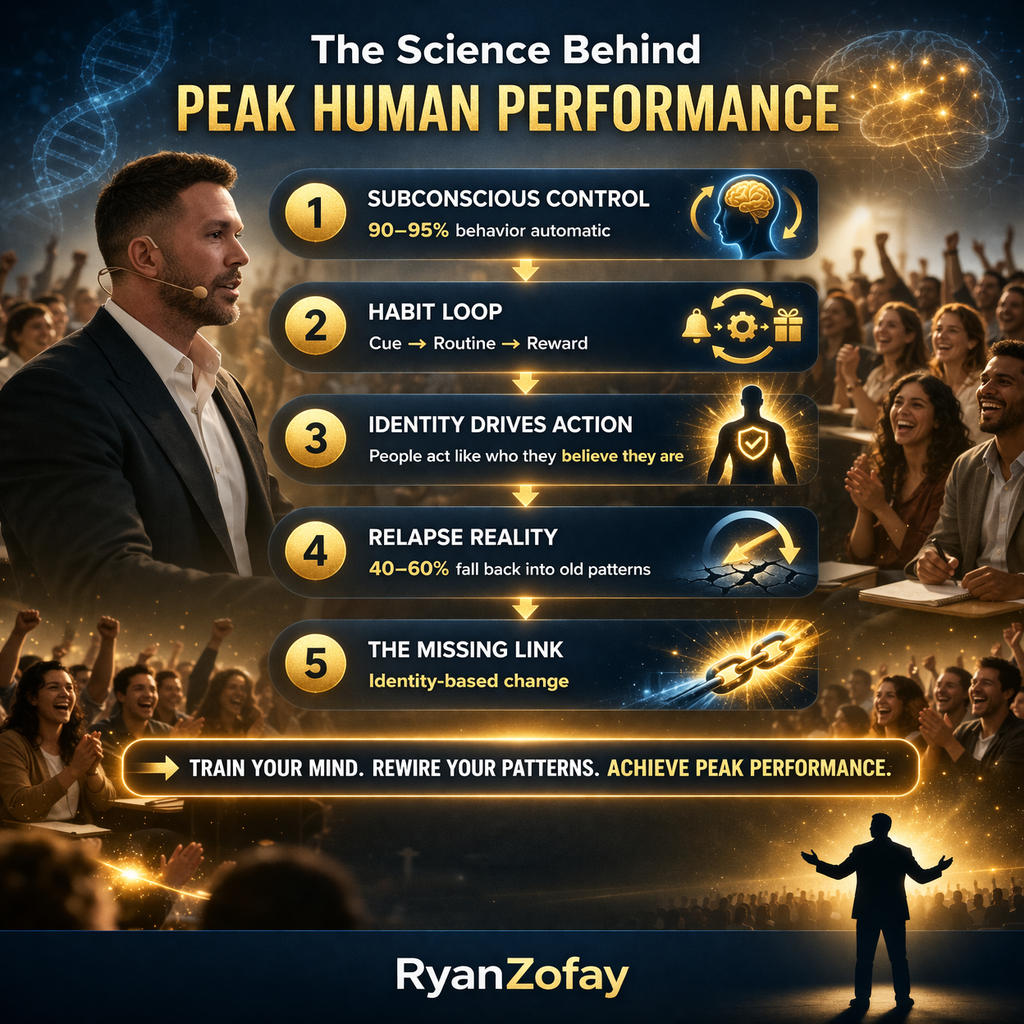
Key principles:
- Habits are stored in neural circuits
- Repetition strengthens behavior patterns
- Emotional experiences reinforce learning
- Identity shapes decision-making
If old patterns are not changed, performance will always revert.
Science shows that identity and subconscious patterns drive results more than effort alone.
Applying Science-BASED Insights, Tips and Exercises that Drive Performance
Long-term performance is driven by identity and systems, not effort alone. Research shows how habits, identity, and subconscious patterns shape behavior. Below is a clear breakdown of key studies and how you can apply them in real life using my proven evidence-based approach.
Performance Science + Practical Application
| Research, Findings, Stats & Source | Insights, Tips & Practical Exercises |
|---|---|
| Bargh & Chartrand (1999). Findings: Most behavior is automatic and subconscious. Stat: Up to 90–95% of actions are subconscious. Most actions are automatic. https://psycnet.apa.org/record/1999-13324-001 | Insight: You cannot rely on willpower alone. Your subconscious drives your actions. Tip: Focus on identity, not just behavior. Exercise: Write down one habit you repeat daily. Ask: “What belief drives this?” Replace it with a stronger identity statement. Guide: Identify negative deep rooted beliefs that act as false self limiting beliefs. Learn to improvise adopt and overcome them. |
| Prochaska & DiClemente (Stages of Change Model) Findings: Behavior change happens in stages, not instantly. Stat: Most people relapse before lasting change. https://web.uri.edu/cprc/transtheoretical-model/ | Insight: Change is a process. Expect setbacks. Tip: Build awareness first before forcing change. Exercise: Rate yourself from 1–10 on readiness to change. Then take one small action today. Guide: Change happens in steps. Engineer change management for your life and business through a practical process. |
| National Institute on Drug Abuse (NIDA). Findings: Relapse rates are similar to those of chronic illness Stat: 40–60% relapse rate –https://nida.nih.gov/publications/drugs-brains-behavior-science-addiction/treatment-recovery | Insight: Relapse is not failure. It is part of growth. Tip: Focus on rebuilding patterns, not blaming yourself. Exercise: Create a “reset plan” for when you slip. Write 3 actions you will take immediately. Guide: Falling back is part of growth. They key is to overcome adversity at each turn. |
| Duhigg (The Power of Habit) Findings: Habits follow cue → routine → reward loop Stat: Habits drive daily behavior patterns https://charlesduhigg.com/the-power-of-habit/ | Insight: Change the loop, not just the outcome. Tip: Identify your triggers. Exercise: Track one habit for 3 days. Write the cue, action, and reward. Then change the routine only. Guide: Habits control outcomes. Adopt a morning routine for success and see your habits enhancing your success. |
| Oyserman (Identity-Based Motivation, 2009). Findings: People act in line with identity. Stat: Identity-aligned actions last longer. https://dornsife.usc.edu/assets/sites/782/docs/identity-based_motivation.pdf | Insight: You act like who you believe you are. Tip: Shift your identity first. Exercise: Write: “I am the type of person who…” and complete it with your goal identity. Repeat daily. Guide: You are smarter than you think. You are stronger than you believe. |
| Grand View Research (Self-Improvement Market) Findings: Industry growth shows demand for change Stat: $50B+ global market. www.grandviewresearch.com/industry-analysis/self-improvement-market | Insight: Many seek change, but few sustain it. Tip: Focus on depth, not more information. Exercise: Stop consuming content for one day. Take action on one idea instead. Write: “I am the type of person who…” and repeat daily. Guide: People act like who they believe they are. Learn how to improve your life. |
How to Apply This Science in Your Daily Life
The research is clear. Lasting peak flow state comes from:
- Changing subconscious patterns
- Building identity-based habits
- Taking consistent action
You do not need to overhaul your life overnight. Start small. Focus on one change. Then build from there over time. Sustainable performance is built incrementally.
Start with these steps:
- Identify one repeating behavior pattern
- Understand the belief driving it
- Replace it with a new identity-based action
- Repeat consistently
Example:
Instead of saying: “I want to be productive”
Shift to: “I am the type of person who executes daily without hesitation”
This subtle shift changes behavior at the identity level.
Turning Knowledge Into Performance
Most people read about change but do not apply it. That is why results do not last. Science shows that behavior, identity, and habits are deeply connected. When you change how you think at a deeper level, your actions follow naturally.
Execution requires:
- Clarity
- Structure
- Accountability
Without these, knowledge remains unused.
My approach focuses on this exact process. Instead of short-term motivation, it builds long-term transformation. When you combine science with action, you move closer to true peak neuroplasticity.
The Role of a Peak Performance Coach
A peak performance coach helps you see what you cannot see alone. They guide you through change step by step and help accelerate growth.
With the right peak performance coaching, you can:
- Identify limiting beliefs
- Shift your mindset
- Build strong habits
- Stay consistent over time
Your coach can provide:
- External perspective
- Behavioral feedback
- Structured accountability
- Proven frameworks

Coaching reduces trial-and-error and speeds up transformation. A coach also keeps you accountable. This is key for growth.
The Zofay Peak Performance Training Center for Structured Growth
Ryan Zofay is known for helping people change from the inside out. His work focuses on identity, not just action.
At his peak performance center, clients learn how to:
- Rewire their thinking
- Build emotional strength
- Take control of their life
Ryan has worked with entrepreneurs, people in recovery, and high performers. His method is simple but powerful.
Many clients say they finally feel clear and focused after years of struggle.
My peak performance training approach combines:
- Mindset work
- Habit formation
- Emotional regulation
- Behavioral restructuring
- Real-life application
This makes it easier to reach and sustain deep work, not short-term results. Structured systems consistently outperform self-guided efforts.
Building Your Peak Performance Team
No one succeeds alone. A strong peak performance team can help you grow faster.
This team may include:
- A coach
- A mentor
- Support groups
They help you stay on track. They also give feedback and support.
When you build the right team, your progress becomes stronger and more stable.
The right support system strengthens consistency and progress.
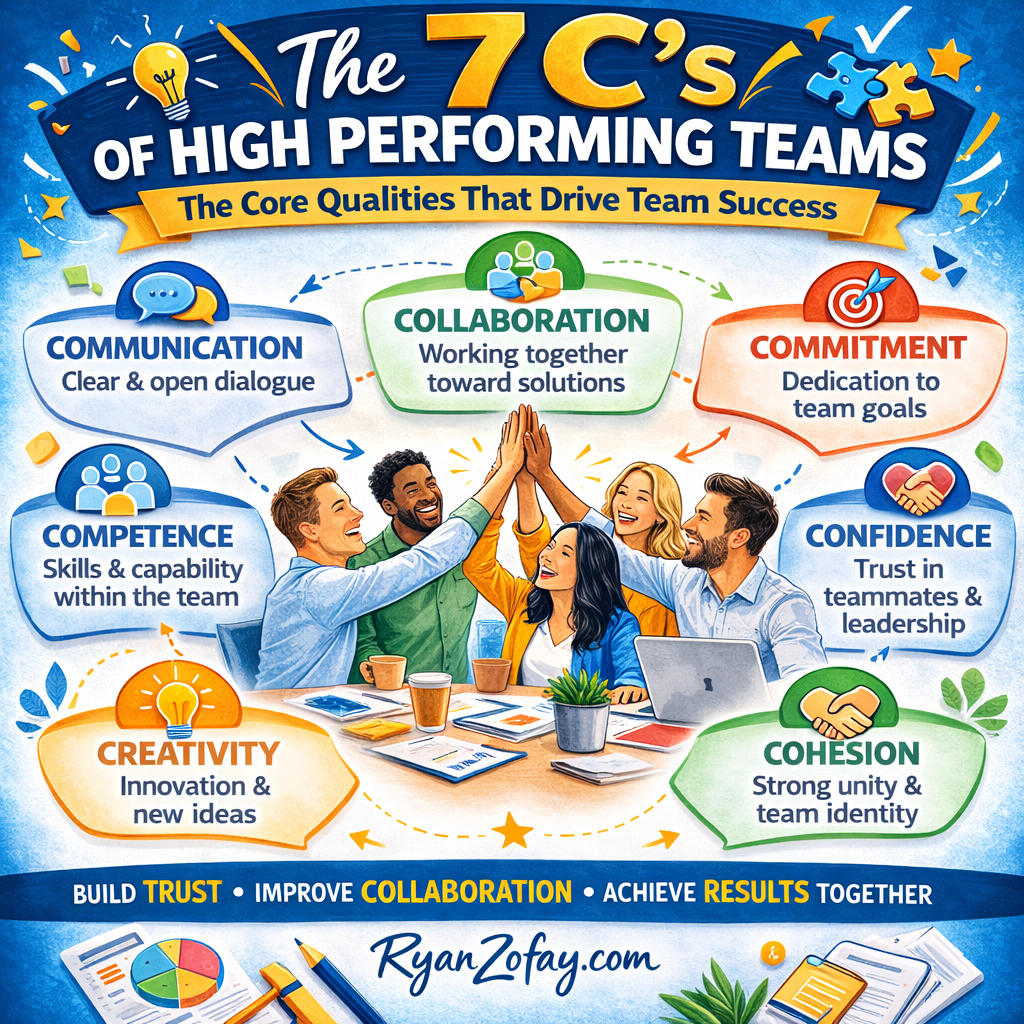
How to Start Your Improvement Journey
You do not need to wait for the perfect moment. You can start today.
Here are simple steps:
- Become aware of your patterns
- Focus on identity, not just goals
- Get support from a coach or program
- Stay consistent, even when it feels hard
Many people choose to book peak performance sessions to get guided help.
This creates faster and deeper change.
Peak Performance in Mental Health and Recovery
Peak flow state is not just for business or athletics. It is critical in recovery and mental health.
For people in recovery, peak neuroplasticity is not about being perfect. It is about stability and growth.
In this context, it means:
- Emotional stability
- Reduced relapse risk
- Improved decision-making
- Building a new identity
A strong mindset reduces stress and improves decision-making. This is why peak performance coaching is often used in mental health and addiction recovery. It helps people rebuild their lives with clarity and purpose.
Lastly, performance and recovery are closely connected through behavior and mindset.
Building a High-Performance Support System
No one achieves sustained performance alone.
A strong support system includes:
- Coaches
- Mentors
- Peer groups
These provide accountability, feedback, and reinforcement.
How to Start Your Peak Flow State Journey
You can begin immediately with a simple framework:
- Become aware of your current patterns
- Shift focus from goals to identity
- Implement one consistent habit
- Seek structured guidance if needed
Consistency—not intensity—is what drives results.
Join Our Peak Performance Institute for Long-Term Growth
A structured peak performance institute like ours gives people tools and support.
These programs focus on:
- Mindset training
- Habit building
- Emotional regulation
They create a system for long-term success.
This is more effective than learning from a single peak performance book.
Real change comes from action and support.
FAQs About Peak Performance
What is the meaning of peak performance?
The meaning of peak performance is reaching your best mental, emotional, and physical state. It means you perform well in all areas of life.
What makes someone a peak performer?
A peak performer has strong habits, a clear mindset, and emotional control. They stay consistent over time.
Can anyone achieve peak human performance?
Yes. Anyone can improve with the right tools and support. Peak human performance is built step by step.
What does a peak performance coach do?
A peak performance coach helps you change your mindset, remove blocks, and build better habits.
How does Ryan Zofay help or coach clients?
Ryan Zofay uses a method focused on identity and behavior change. He helps clients rewire their thinking, break patterns, and build lasting success through guided peak performance coaching.
Is peak performance therapy useful for recovery?
Yes. Peak performance therapy helps people manage emotions, reduce relapse risk, and build a stable life.
Take the First Step Toward Peak Performance
You may feel tired of trying and starting over. Feeling stuck in the same patterns. Or you may feel like something deeper is holding you back. That feeling is real. It comes from patterns that have not changed yet. But change is possible. Many people have already rebuilt their lives and become high performers by changing how they think and act. You can do the same. Join my seminars and take your first step toward true sky-high performance. Your next level is not far away.
Why Trust This Content
This article is written and reviewed by Ryan Zofay. He is a neuro-linguistic and neuroscience specialist, peak performance coach, and founder of a peak performance training center. His coaching focuses on helping individuals achieve sustainable high performance through identity-based transformation and subconscious reprogramming. With extensive experience working with entrepreneurs, professionals, and individuals in recovery, he applies neuroscience-backed strategies. He applies behavioral coaching, and mindset development to improve clarity, emotional resilience, and long-term results.
All strategies discussed focus on sustainable, evidence-based transformation rather than short-term motivation or surface-level tactics.
As seen in the news
80% Fail to Sustain Peak Performance—Neuro-Linguistic Specialist Ryan Zofay Reveals What Actually Works
Backed by behavioral science and real-world transformation stories
Despite rapid growth in the peak performance industry, it is expected to exceed $50 billion worldwide. Most people still struggle to stay consistent. Research shows that nearly 80% of people do not keep long-term behavior changes. This points to a major gap between popular performance strategies and real-world results.
According to neuro-linguistic specialist Ryan Zofay, the problem isn’t effort or ambition. Most peak performance advice focuses on surface-level tactics. It often ignores the deeper drivers of behavior.
“Most peak performance strategies focus on discipline, productivity, and motivation,” Zofay says.“But if they don’t address subconscious programming, those strategies won’t last.” Real performance is driven by identity, not effort.”
Research suggests that subconscious processes drive 90–95% of human behavior. Yet most performance strategies focus only on conscious action. At the same time, studies show that nearly 80% of people cannot sustain long-term behavior change. This reveals a major gap between popular performance advice and real-world outcomes.
Why Peak Performance Strategies Break Down
Zofay points to a common pattern among entrepreneurs and professionals: short-term gains that are difficult to sustain. He argues that optimizing behavior without changing identity leads to inconsistency over time.
“The reason people lose momentum isn’t a lack of discipline,” he explains. “It’s because their internal blueprint hasn’t changed.”
This challenge also appears in broader behavioral research. It shows that relapse rates for behavior patterns range from 40% to 60%, much like other chronic conditions. These findings reinforce the need for deeper, more sustainable approaches to achieving peak performance.
Real-World Proof of Transformation
Zofay’s methodology is reflected in transformation stories shared on his YouTube channel, where individuals document measurable breakthroughs in performance, clarity, and direction.
In one example, an entrepreneur faced burnout and financial collapse. After using Zofay’s framework, they rebuilt business performance and personal stability. In another, an individual struggling with long-term destructive patterns achieved renewed focus and purpose through identity-based change.
“These aren’t just improvements in productivity,” Zofay says. “They are complete shifts in how people think, operate, and perform.”
The Future of Peak Performance: Identity-Based Change
As the talk about peak performance evolves, Zofay believes the next frontier is identity-based transformation, not small improvements.
Behavioral science increasingly supports this approach. It suggests people are more likely to sustain high performance when their actions match their identity. They can do this instead of relying on motivation alone.
“Peak performance isn’t about doing more,” Zofay explains. “It’s about becoming someone who naturally performs at a higher level.”
Immersive Experiences for Lasting Results
Zofay delivers this methodology through immersive live events designed to create rapid internal change. These experiences help participants break mental barriers in real time. Reported outcomes include better decision-making, improved emotional control, and sustained performance.
Upcoming events are expected to attract entrepreneurs, executives, and individuals seeking consistent, high-level performance.
About Ryan Zofay
Ryan Zofay is a neuro-linguistic specialist and transformation coach focused on helping individuals achieve peak performance by rewiring limiting beliefs and subconscious patterns. Through live events, coaching, and digital content, he works with clients seeking sustained success, clarity, and high-level performance.
Media Contact:
Ryan Zofay Media Relations
Website: https://ryanzofay.com
📊 Selected Research & Data Sources
- Bargh, J. A., & Chartrand, T. L. (1999). The unbearable automaticity of being. American Psychologist.
https://psycnet.apa.org/record/1999-13324-001 - Duhigg, C. (2012). The Power of Habit.
https://charlesduhigg.com/the-power-of-habit/ - Prochaska, J. O., & DiClemente, C. C. (1983). Stages of Change Model
https://web.uri.edu/cprc/transtheoretical-model/ - National Institute on Drug Abuse (NIDA). Relapse rates and chronic condition comparison
https://nida.nih.gov/publications/drugs-brains-behavior-science-addiction/treatment-recovery - Grand View Research – Self-Improvement Market Size
https://www.grandviewresearch.com/industry-analysis/self-improvement-market - Oyserman, D. (2009). Identity-based motivation and behavior
https://dornsife.usc.edu/assets/sites/782/docs/identity-based_motivation.pdf
